Have you ever stared at a bottle of retinol in your bathroom cabinet, completely terrified to open it? You are definitely not alone. Between horror stories of peeling skin on social media and warnings about the dreaded retinol purge, it is easy to see why so many people leave this powerhouse ingredient sitting on the shelf.
The old school belief was that you had to suffer through redness and raw skin to get results. Today, dermatologists know that peeling, burning, and tight redness are signs of retinoid dermatitis, which simply means a damaged moisture barrier. Real efficacy does not require irritation.
Retinol remains the gold standard in skincare for good reason. It speeds up cell turnover, stimulates collagen production, clears congested pores, and smooths fine lines. As we handle skincare routines in 2026, the modern approach puts barrier health first. You do not need aggressive, high-strength formulas to see real changes. European regulations capped over-the-counter facial retinol products at 0.3% Retinol Equivalent.¹ This shift proves that lower doses work exceptionally well without destroying your skin in the process.
The Golden Rule of Gradual Introduction
For retinoids, less is genuinely more. Dumping a high concentration onto your face right away does not speed up your progress. It only triggers inflammation, flaking, and a disrupted skin barrier that takes weeks to heal.
Finding the right starting formula is your first task
• Low-dose retinol (0.01% to 0.1%): Best for dry, mature, or very sensitive skin types who want the lowest possible risk of irritation.
• Standard over-the-counter retinol (0.1% to 0.3%): A balanced starting point for normal or combination skin that aligns with modern safety caps.
• Retinal (0.025% to 0.05%): Excellent for acne-prone skin because it requires only one conversion step to retinoic acid, working faster with surprisingly little irritation.
• Granactive retinoid (1% to 2% complex): A great choice for reactive or redness-prone skin since it binds directly to cellular receptors without needing conversion.
Once you have your product, follow the 1-2-3 ramp-up schedule. Use it one night a week for the first two weeks to watch for delayed inflammation. Increase to two nights a week for weeks three and four. Move to three nights a week during weeks five and six. By week seven, you can comfortably transition to every other night or nightly use, depending on how your skin feels.
If your skin is prone to stinging, rely on the sandwich method.² Start by applying a lightweight moisturizer packed with ceramides or glycerin. Let it dry completely for five to ten minutes. Next, apply your retinoid. Finally, finish with another layer of barrier cream. This simple buffering technique slows down the penetration of the active ingredient without reducing its long-term benefits.
Before applying your product, protect your barrier buffer zones. The delicate skin around your eyelids, the creases around your nostrils, and the corners of your mouth are up to fifty percent thinner than the rest of your face. Dab a tiny bit of plain petrolatum or ointment onto those areas first to keep the retinol from settling into folds and causing cracks.
Mastering Your Routine with Nighttime Care and Sunscreen
Retinol belongs strictly in your evening routine. Sunlight degrades traditional retinol molecules, making them far less effective when applied during the day.
Keep your nighttime routine refreshingly simple
1. Cleanse with a gentle, non-foaming face wash that removes dirt without stripping moisture.
2. Pat your skin dry with a clean towel and wait two minutes. Never apply retinol to damp skin, because moisture accelerates product absorption and spikes the likelihood of burning.
3. Dispense a single pea-sized amount onto your fingertip. Dot it onto your forehead, cheeks, and chin, then smooth it outward.
4. Follow with your favorite barrier-repairing night cream.
Retinol also thins the very top dead layer of your stratum corneum, which temporarily reduces your natural defense against ultraviolet light. Because of this, wearing a broad-spectrum sunscreen with an SPF of 30 to 50 every single morning is completely non-negotiable. Skipping daily sunscreen while using retinol undoes your hard work and exposes new skin cells to premature aging and sun damage.
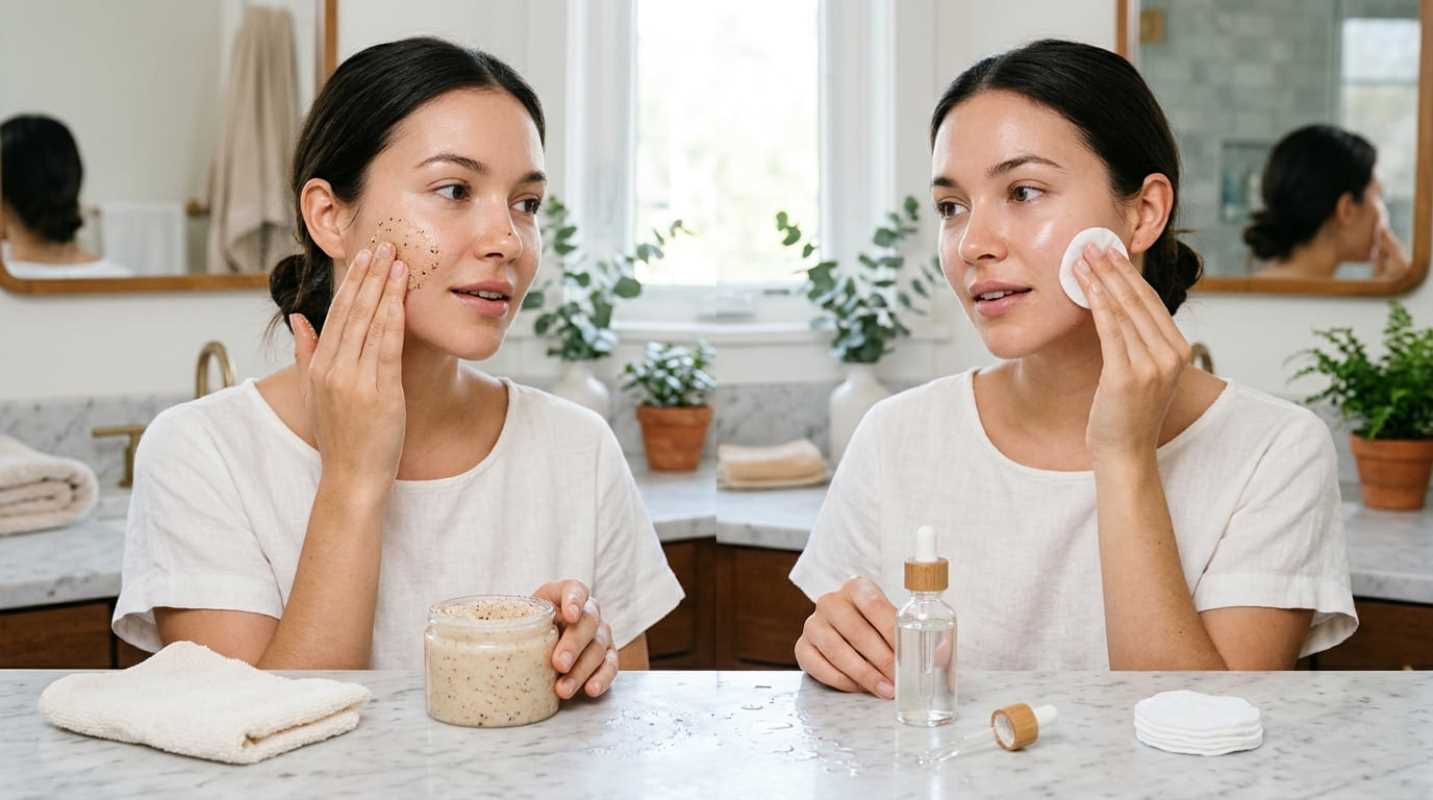
Although your skin adjusts over the first two months, press pause on other intense activities. Put away your glycolic, lactic, and salicylic acid exfoliants. Avoid gritty facial scrubs, rough cleansing brushes, and high-strength pure vitamin C serums. Also, skip facial waxing appointments for at least one week before and after using retinoids to avoid pulling delicate skin. Instead, look for soothing ingredients like panthenol, centella asiatica, and niacinamide to keep inflammation low.
Understanding the Transition by Managing Dryness and Purging
One of the biggest reasons beginners quit is mistaking an ordinary purge for an allergic reaction or skin damage. Learning what is happening beneath the surface will help you stay calm and make the right adjustments.
Retinol accelerates your natural cellular turnover from roughly 28 days to a much faster rate. This process pushes pre-existing clogs and hidden microcomedones to the surface all at once.³
Here is how you can tell the difference between purging and irritation
• Location: A purge happens in your usual breakout zones, such as your chin or forehead. Irritation shows up as redness, flaking, or rash-like bumps in brand-new areas like your cheeks or neck.
• Blemish type: Purging presents as tiny whiteheads and small surface pimples that clear quickly. Irritation causes burning, raw texture, or persistent stinging.
• Timeline: A purge typically begins between days 7 and 14, peaks around week four, and resolves completely by week six. Irritation gets progressively worse with every application if you do not stop.
• Skin feel: If putting on a basic, bland moisturizer makes your skin burn or sting, your skin barrier is compromised.
If you find yourself facing true irritation, stop using retinol immediately for five to seven days. Switch to a bare-bones routine consisting of a gentle cleanser, a rich ceramide cream, and sunscreen. Once the stinging subsides completely, reintroduce your retinol at a lower frequency using the sandwich method.
Finding the right beginner formula can take the guesswork out of starting your retinoid journey. Here are our vetted choices to help you build a solid routine without unwanted side effects.
Patience and Consistency for Long-Term Skin Health
Building retinol tolerance is a marathon rather than a sprint. Although your cell turnover speeds up within the first few weeks, noticeable changes in collagen production, fine lines, and skin firmness require three to six months of regular application.
Do not rush to increase your formula strength just because your skin feels fine after a month. Consistency at a low or moderate concentration yields excellent long-term results without the endless cycle of barrier repair and downtime. Stick with your starting formula for at least six months before deciding whether you even need a stronger product.
By treating your moisture barrier with care and committing to a slow ramp-up, you will enjoy smoother, brighter, and clearer skin without ever having to endure painful irritation along the way.
Sources:
1. Grand Ingredients - EU Retinol Limits
https://grandingredients.com/eu-retinol-limits/
2. Doctor Rogers - Step-by-Step Guide to Starting a Retinoid
https://www.doctorrogers.com/blogs/blog/step-by-step-guide-to-starting-a-retinoid
3. Aesthetic Med Guide - Retinol Purge
https://aestheticmedguide.com/blog/retinol-purge
*This article on Katiently is for informational and educational purposes only. Readers are encouraged to consult qualified professionals and verify details with official sources before making decisions. This content does not constitute professional advice.*