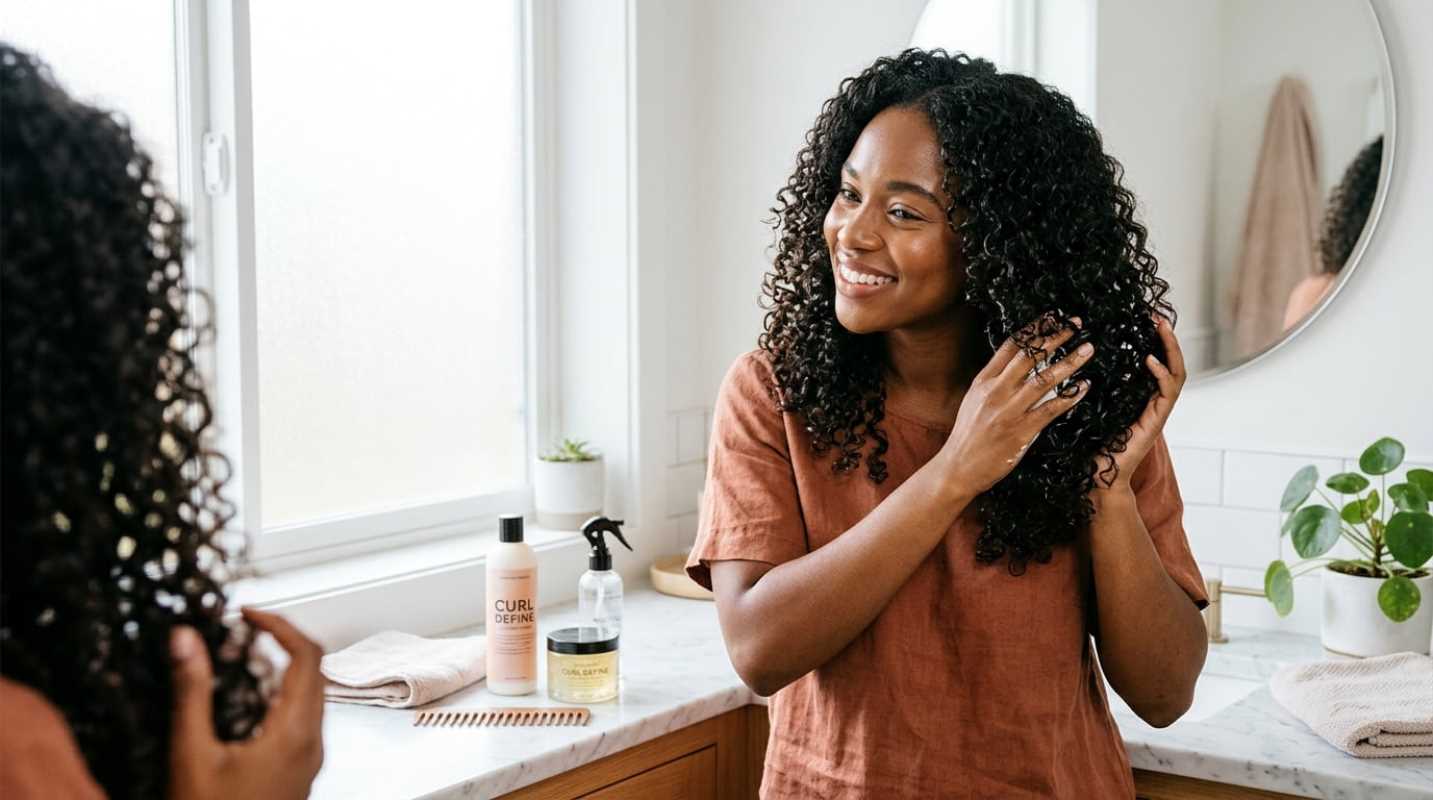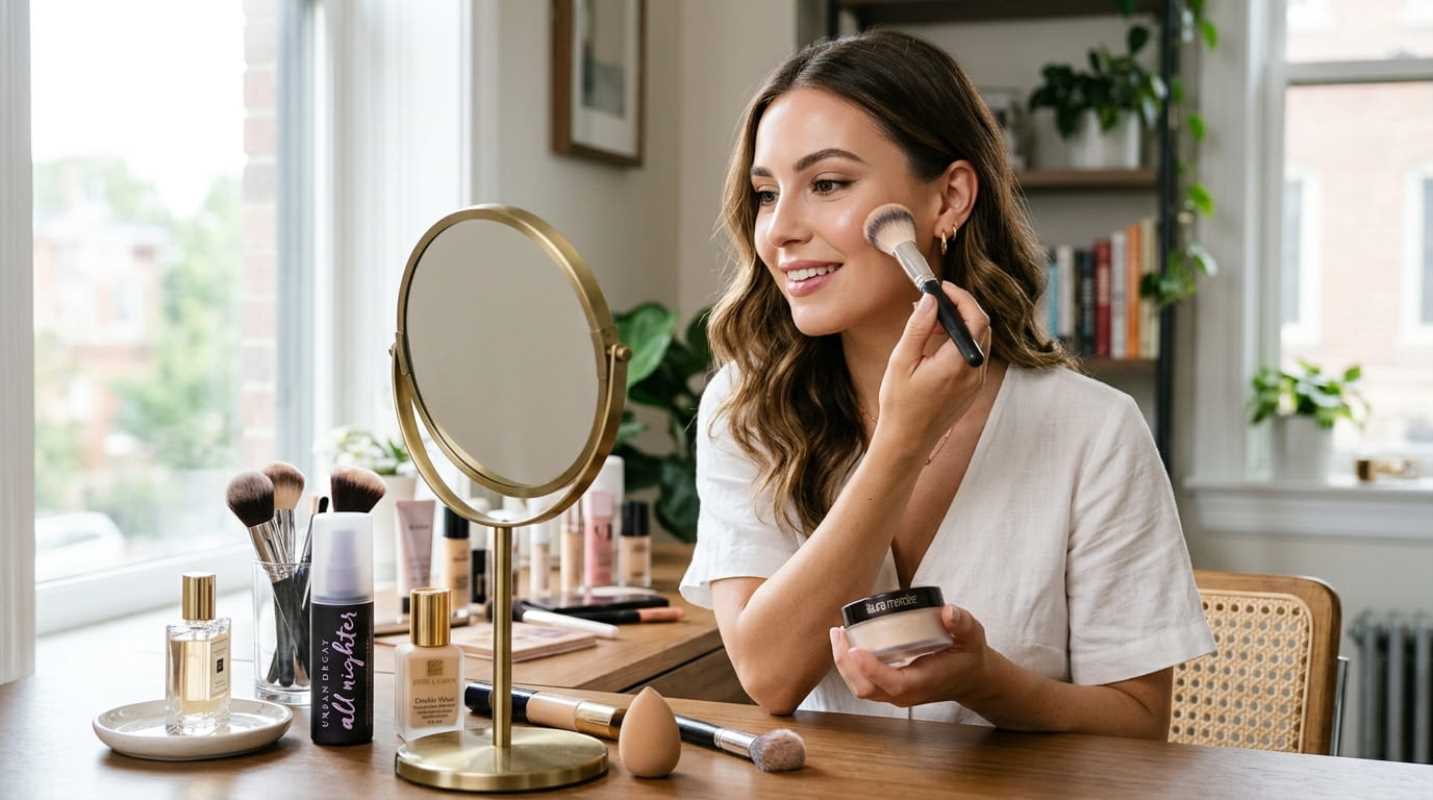
Have you ever spent forty minutes meticulously blending your base, only to catch your reflection at 3 p.m. and realize your face has practically melted off? It is a universal frustration. Between natural facial oils, ambient humidity, and the simple friction of daily life, keeping makeup locked in place feels like an uphill battle. When sweat and sebum mix on your skin, they act like a cleansing oil, dissolving the binders that hold pigment together.¹
The solution isn't piling on thick, heavy layers like beauty gurus did a decade ago. In fact, heavy makeup breaks down much faster than sheer coverage because the internal tension causes the whole layer to slide. Keeping your face fresh from morning until midnight comes down to skin prep, smart layering, and modern formulation chemistry.
The Foundation of Longevity and Non-Negotiable Skin Prep
Great makeup always starts with what is underneath it. If you try to paint on an unbalanced canvas, you are setting yourself up for an afternoon slip-and-slide.
Start by ditching the idea that oily skin doesn't need moisturizer. When you skip hydration, your skin barrier panics and produces even more oil to compensate. Reach for a lightweight, oil-free water gel containing hyaluronic acid or niacinamide. Niacinamide helps balance sebum levels throughout the day without leaving a greasy film behind. If you have drier skin, choose a light lotion that sinks in quickly rather than a heavy, occlusive cream.
Next comes the most overlooked step in beauty: the five-minute waiting rule.
After applying your moisturizer and sunscreen, step away from the mirror. Give your skincare at least five full minutes to dry down and absorb into your skin. If you start dabbing liquid foundation over damp sunscreen, the two formulas mix on the surface. That creates pilling, streaks, and an unstable base that will never grip your face properly. If you still see a sheen on your T-zone after five minutes, gently blot it with a clean tissue before reaching for your makeup.
Mastering the Application Order for Maximum Adhesion
Layering products is a bit like building a house. If the foundation isn't set, the walls will crumble.
Always stick to the golden rule of textures: liquids and creams go first, powders go second. Once you set a liquid foundation with a powder, applying another cream product on top turns the mixture into an uneven paste.
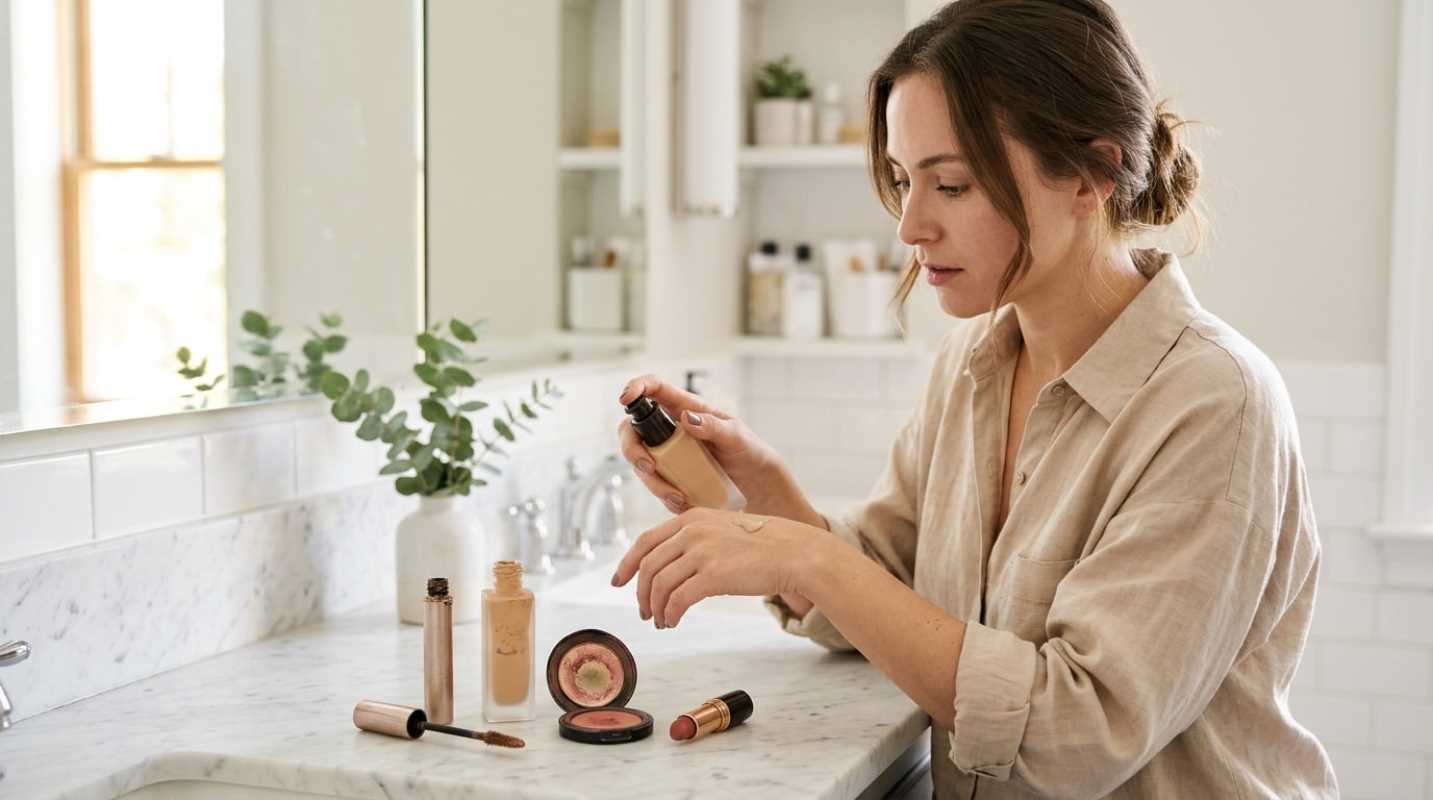
Try applying your foundation before your concealer. When you apply foundation first, you create a thin, uniform base that evens out most redness and discoloration. You will quickly notice that you need far less concealer than you thought. Dab concealer only where you genuinely need extra help, such as dark under-eye circles or blemishes. Using less product overall means there is less pigment sitting on your skin to crease or separate.²
Where you place your product matters just as much as how much you use it
• High-movement zones: Keep coverage feather-light around your smile lines, forehead creases, and crow's feet. Thick makeup here will crack as soon as you laugh or talk.
• The center of the face: Focus your primary coverage on the flat areas of your cheeks and the bridge of your nose, then blend outward toward the hairline with a damp sponge.
• The perimeter: Let the product taper off near the jawline and hair. This keeps the look natural and stops the foundation from rubbing off on your clothes.
The Power of Primer and Setting Products
Primer and setting products are your structural insurance policy. But they only work if their formulas actually get along.
Always match the base of your primer to the base of your foundation. If you pair a heavy silicone-based primer with a water-based foundation, they will repel each other, leading to patchiness within hours. Water-based goes with water-based, and silicone goes with silicone. If excess oil is your main issue, look for primers featuring ingredients like Upsalite, an ultra-porous magnesium carbonate that traps sebum throughout wear without drying you out.
To take your longevity to another level, use the sandwich method
1. Mist your bare face lightly with a setting spray right after your primer dries to create an initial tacky layer.
2. Apply your liquid foundation and concealer, blending them out smoothly.
3. Lock high-oil areas with a fine dusting of translucent powder.
4. Seal your entire face with a final, generous coat of setting spray.
This technique sandwiches your pigment between two layers of film-forming polymers, locking the makeup in place from both sides.
Combatting Oily Skin and Humidity Tips
Hot weather and high humidity make makeup longevity tough. Perspiration cannot evaporate into humid air, so sweat collects on your skin and pushes your makeup off from underneath.³
When shine starts breaking through in the afternoon, put the powder compact away. The absolute worst thing you can do to an oily T-zone is press powder directly over wet sebum. You will end up with a chalky, cakey mess that accentuates texture.
Instead, follow this simple midday touch-up routine
• Blot first: Take a sheet of blotting paper or a simple linen tissue and press it firmly over shiny areas. Let the paper soak up the oil without dragging it across your skin.
• Press lightly: Pick up a tiny amount of translucent powder on a puff and gently press it onto your shiny spots. Never swipe or buff.
• Re-seal: Spritz a fine mist of setting spray from about ten inches away. This rehydrates the powder particles, melts everything back together, and restores a fresh finish.
In swampy weather, swap your everyday liquids for oil-free, water-resistant bases. Long-wear formulas designed with flexible polymer meshes move with your facial expressions instead of breaking apart under heat.
Pro Tips for Keeping Your Look Fresh Until Midnight
Professional artists have a few clever tricks up their sleeves that keep makeup intact through long hours under studio lights
• The press-and-roll technique: Put down your big, fluffy powder brush. Fluffy brushes sweep powder across the surface, leaving gaps where oil can push through. Instead, use a triangular velour powder puff. Dip it into loose powder, work the product into the back of your hand to shake off excess, then press and roll the puff firmly into your T-zone and under-eyes. This packs the powder tightly into your base without disrupting the foundation underneath.
• Micro-dosing your base: Less product always lasts longer. Think of foundation as a skin tint with spot coverage, rather than a thick blanket. Sheer layers cling tightly to the skin barrier, while heavy coatings float on top and slide at the first sign of sweat.
• Focus on film-formers: When shopping for a setting spray, check the ingredient list for polymers like PVP or acrylates. These ingredients dry down into an invisible, flexible shield that repels moisture and prevents makeup transfer onto collars, phones, or sunglasses.
Give these methods a run during your next long day. You will spend far less time worrying about your mirror, and your base will stay intact straight through the evening.
Sources:
1. Bustle
https://www.bustle.com/beauty/best-longwear-foundations-for-heat-humidity
2. Bold Eye Beauty
https://www.boldeyebeauty.com/post/bold-eye-beauty-s-10-expert-tips-to-make-your-makeup-last-all-day-this-summer
3. Real Techniques
https://realtechniques.com/blogs/technique-talk/how-to-lock-in-makeup-for-hot-humid-weather-5-sweat-proof-approaches