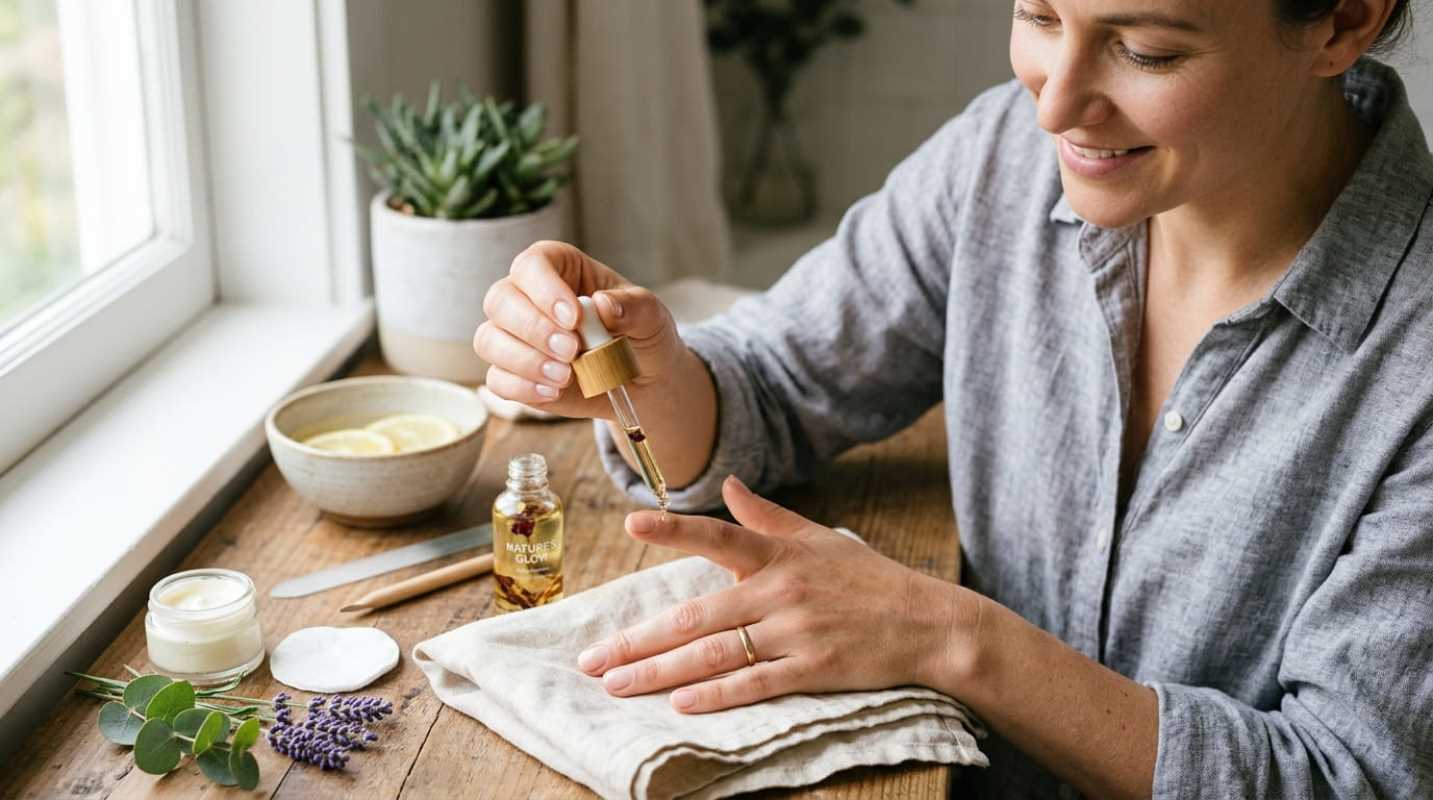
Have you ever looked down at your hands and noticed a jagged split right before an important event? Maybe your nails constantly peel in thin layers, or they snap the second they grow past your fingertips. If that sounds familiar, you aren't alone. Brittle Nail Syndrome affects roughly 20% of adults, and women deal with it twice as often as men.¹
Nails aren't just an aesthetic canvas for your favorite polish. They reflect your daily habits and your overall wellness. When your nails are weak, they're usually sending a distress signal about moisture loss or physical stress.
Fingernails only grow about two to three millimeters each month, and that rate slows down as we get older. That means a damaged nail tip has been exposed to months of hand washing, friction, and environmental wear.
The good news is that building stronger nails doesn't require expensive salon trips or complicated regimens. With a few targeted changes to your at-home routine, you can restore flexibility and stop peeling in its tracks.
The Foundation of Mastering Cuticle Care
If you want strong nails, you have to treat your cuticles with respect. Think of your cuticle as a miniature rubber gasket around a watch face. It forms an impermeable biological seal that protects the nail matrix, which is the hidden factory beneath your skin where new nail cells are born.
When you cut or aggressively push back that seal, you invite trouble. Trends like Russian manicures, which use high-speed electric drill bits to grind away the cuticle and living skin folds, might look clean in photos. In reality, they remove your body's primary defense against bacteria and yeast. Stripping that skin frequently leads to painful infections like paronychia and can permanently damage the nail matrix.
Stick to gentle, non-invasive maintenance instead
• Leave the nippers in the drawer: Never cut living tissue around the nail base. Only trim loose, dead hangnails along the lateral sidewalls that might snag on clothing.
• Soften before moving: If you want a cleaner look, soften your cuticles in the shower or with warm water, then gently nudge them back using a soft washcloth.
• Try nail slugging at night: Nails are significantly more porous than skin, meaning they gain and lose water rapidly. Coat your nails with pure jojoba oil, which can penetrate keratin layers. Follow immediately with an occlusive balm like plain petrolatum to lock that hydration in place while you sleep.
Nail Strengthening Habits That Actually Work
Many people assume weak nails are dry nails that need more water. The truth is quite the opposite. Repeated cycles of wetting and drying are one of the most common causes of onychoschizia, the horizontal peeling you see at the tips of your nails.
Every time your nails get wet, they swell with water. As they dry, they shrink. This constant accordion effect strains the intercellular lipid bonds holding your keratin layers together.
Dermatologist Dr. Dana Stern points out that traditional nail hardeners often make this problem worse.² Many classic formulas contain formalin or formaldehyde, which bind keratin fibers so tightly that the nail plate turns rigid. Healthy nails need flexibility so they can bend when you bump them. Rigid nails simply crack.
Here are the everyday habits that make a real difference
• Wear cotton-lined rubber gloves: Slip them on whenever you wash dishes, scrub counters, or handle household cleaning chemicals. Use dry cotton gloves when handling cardboard boxes or gardening.
• Rethink high-dose biotin: Marketing makes Vitamin B7 look like a miracle cure, but clinical proof in healthy people is limited. More concerning is an FDA safety warning noting that mega-doses of biotin can alter important emergency blood tests, including heart attack markers.³ Your body only needs about 30 micrograms a day, which you can easily get from whole foods like eggs, nuts, and salmon.
• Fuel your keratin production: Nails are made of compacted keratin proteins. Make sure you're getting enough lean protein, dietary zinc, and water throughout the day to support cellular turnover at the matrix.
At-Home Manicure Basics for Long-Term Strength
How you shape and maintain your nails determines whether they stay intact or snap under pressure. Small mechanical mistakes can derail weeks of healthy growth.
First, throw away your old emery boards and metal files. Those coarse surfaces shred the tip of the nail, leaving jagged microscopic tears that split into full cracks later. Instead, switch to a high-quality etched glass or crystal file. The ultra-fine abrasive surface seals the edge of the nail plate as it shapes it.
When you file, move in one fluid direction from the outside corner toward the center. Sawing back and forth acts like a tiny hacksaw on delicate keratin layers, pulling the dorsal and ventral plates apart.
Timing matters, too. Always clip your nails right after a bath or shower when the keratin is soft and pliable. If you clip them when they're dry and brittle, the blades can shatter the nail edge.
If your nail surfaces look chalky or rough from past polishes, resist the urge to buff them flat. Buffing strips away the structural dorsal layer that gives the nail its strength. A better approach is controlled chemical exfoliation. Applying a lightweight lotion containing 5% to 10% urea or a gentle glycolic acid once a week dissolves dead superficial cells without thinning the nail.
Finally, swap out harsh acetone removers. Look for formulas based on methyl soyate or ethyl lactate. If you have to use acetone to remove stubborn gel or dark polish, coat the skin around your nails with petroleum jelly first to shield your tissue from dehydration.
Common Myths and When to See a Professional
One of the most persistent beauty myths is the idea that nails need to breathe. Nails are made of dead, cornified cells packed with keratin. They don't have lungs, and they don't consume oxygen from the room.
When your nails look improved after taking a break from polish, it isn't because they inhaled fresh air. It's because you stopped soaking them in harsh chemical solvents every week. What they actually need is moisture, gentle mechanics, and rest from aggressive removal techniques.
Although most chipping and peeling stems from daily wear, your nails can also signal underlying health conditions. You should visit a board-certified dermatologist if you spot any of these red flags
• Dark vertical bands: A new brown or black stripe running from the cuticle to the tip requires prompt evaluation to rule out subungual melanoma.
• Pitting or oil drops: Small depressions across the surface or yellowish discolorations near the nail bed are common signs of nail psoriasis.
• Spoon-shaped curves: Nails that scoop inward so deeply they could hold a drop of water can indicate iron deficiency anemia.
• Longitudinal grooving with skin scarring: Severe vertical ridges combined with thinning or skin encroaching over the nail bed can point to lichen planus.
A thoughtful home routine handles the daily friction of life. For everything else, rely on expert clinical eyes to keep your hands looking and feeling their best.
Sources:
1. Brittle Nails: A Clinical Approach
https://pubmed.ncbi.nlm.nih.gov/16198786/
2. Weak Nails, Brittle Nails, and Peeling Nails
https://www.drdanastern.com/nail-news/weak-nails-brittle-nails-and-peeling-nails-understanding-the-difference-and-how-to-restore-healthy-nails
3. What FDA Warns About Biotin Supplementation
https://www.hmpgloballearningnetwork.com/site/podiatry/blogged/what-fda-warns-about-biotin-supplementation
*This article on Katiently is for informational and educational purposes only. Readers are encouraged to consult qualified professionals and verify details with official sources before making decisions. This content does not constitute professional advice.*