Every single day, your body sheds roughly 500 million dead skin cells. Over a typical 28 to 40-day cycle, your skin naturally turns over and pushes fresh cells to the surface. But sun exposure, everyday stress, and getting older cause that natural cycle to slow down.
When those dead cells linger, you get dullness, rough patches, and clogged pores. That is where exfoliation enters the picture. It helps clear away the traffic jam on your face so your skin can reflect light and absorb moisturizers more effectively.
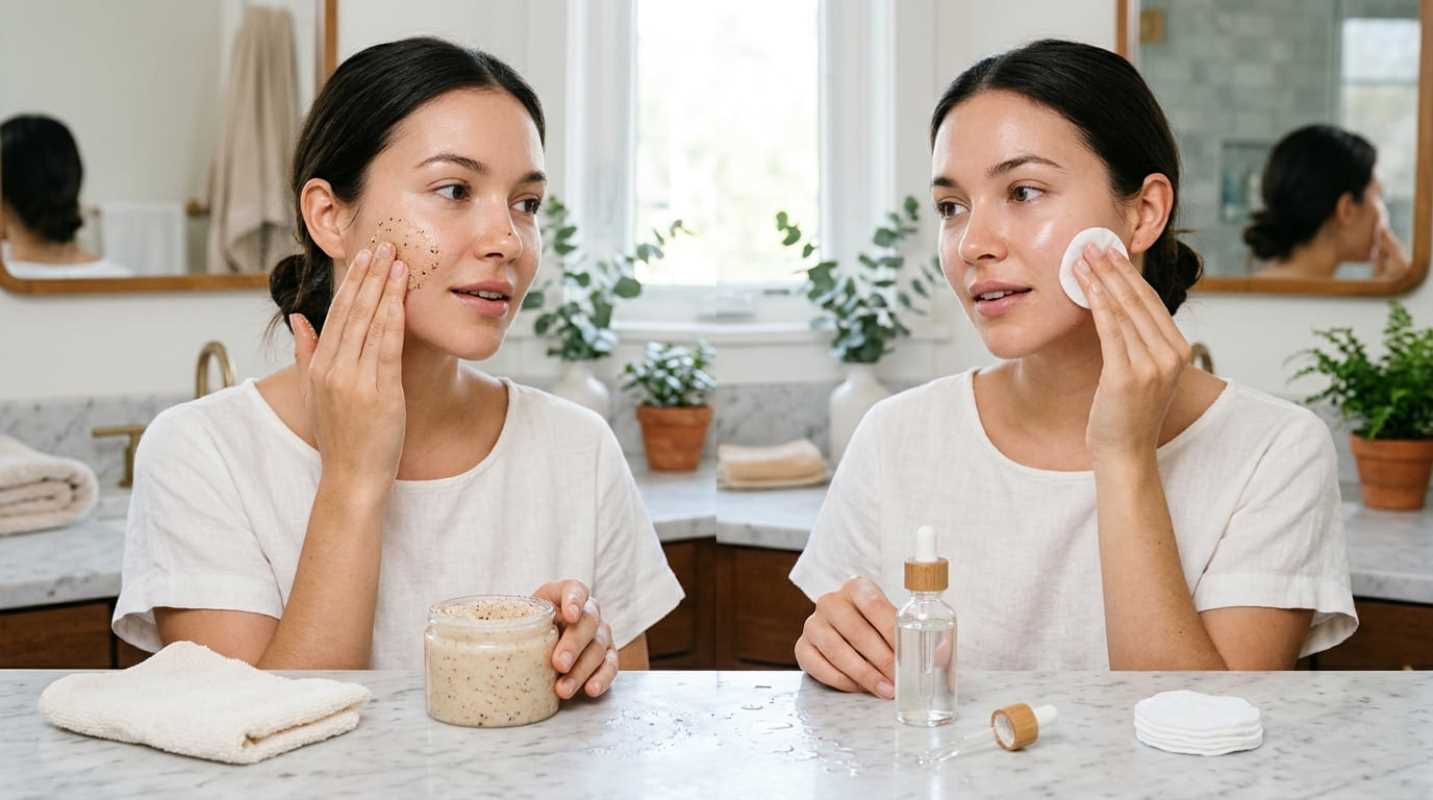
The debate usually comes down to two camps: physical and chemical. Physical methods use mechanical friction to buff away debris. Chemical options use acids or enzymes to dissolve the microscopic bonds holding dead cells together.¹ Which approach actually suits your skin? Let us break down how each works so you can choose the best fit for your routine.
Physical Exfoliation and When Scrubs Actually Work
Most of us know the immediate satisfaction of a physical scrub. You massage gritty beads across your cheeks, splash your face with warm water, and instantly feel baby-soft skin.
Physical exfoliation relies on manual contact to detach dead cells from the outer surface of your skin. This category includes granular scrubs, konjac sponges, cleansing brushes, textured washcloths, and in-office dermaplaning. For thick, oily, or resilient skin, a light mechanical scrub offers quick, tangible results.
The real danger comes down to the shape of the particles. Coarse scrubs made with crushed walnut shells or fruit pits have sharp, irregular edges. When you rub them against your face, those jagged edges create tiny micro-tears in your epidermis. Over time, that friction compromises your moisture barrier and leads to chronic redness.
If you enjoy the tactile feeling of a physical scrub, choose round, uniform particles that glide instead of scratching
• Jojoba beads: Smooth, spherical wax beads that gently roll across your skin without tearing the surface.
• Micro-fine powders: Finely milled rice or bamboo powders that transform into a soft paste when mixed with water.
• Soft washcloths: A clean microfiber cloth or natural konjac sponge used with gentle, circular motions and zero downward pressure.
Keep your scrubbing sessions under 30 seconds. Treat your face like delicate silk rather than an old kitchen skillet.
Chemical Exfoliation and the Science of AHAs and BHAs
Chemical exfoliants might sound intense, but board-certified dermatologists generally prefer them over coarse scrubs.¹ Instead of scraping dead cells away with friction, chemical solutions dissolve the biological glue, known as desmosomes, that keeps dead cells anchored in place.
Because chemical solutions spread evenly across your skin, they create a uniform result without the uneven pressure spots of manual scrubbing.
Most formulas fall into two primary acid groups
• Water-soluble AHAs: Alpha hydroxy acids like glycolic, lactic, and mandelic acid work primarily on the skin surface. Glycolic acid has the smallest molecule, letting it sweep away dullness quickly. Lactic acid is slightly larger and acts as a humectant, pulling water into your skin while it loosens dead cells.
• Oil-soluble BHAs: Salicylic acid is lipophilic, meaning it cuts straight through natural facial oil. It travels directly into your pore lining to break up sticky sebum and debris before a breakout starts. It also carries natural anti-inflammatory benefits to calm existing redness.
• Gentle PHAs: Polyhydroxy acids like gluconolactone have bulky molecular structures that penetrate slowly. They provide light surface renewal without the stinging sensation that more potent acids can cause.
In a national survey of clinical dermatologists, over 88% endorsed gentle chemical exfoliants for managing oily and acne-prone skin.² Modern formulations focus on micro-dosed blends that maintain your barrier rather than stripping it raw with aggressive weekly peels.
Skin Type Considerations to Find Your Perfect Match
Your specific skin type should always guide your choice. A gritty scrub might feel refreshing on thick, resilient skin, but that same scrub could cause severe flare-ups on delicate or sensitive complexions.
Here is how the options line up across common skin profiles
• Oily and acne-prone skin: Stick with salicylic acid (0.5% to 2%). Coarse physical scrubs must never be used over active pimples or cysts. Scrubbing ruptures blemishes beneath the skin, spreads bacteria, and makes inflammation worse.
• Dry skin: Choose lactic acid or polyhydroxy acids once or twice a week. They dissolve flaky patches while boosting moisture levels. Follow up right away with a rich moisturizer containing ceramides.
• Sensitive and redness-prone skin: Skip scrubs entirely. Physical friction triggers blood vessel dilation and makes redness worse. Choose mild polyhydroxy acids or fruit enzymes applied once every 10 to 14 days.
• Melanin-rich skin (Fitzpatrick types IV to VI): Darker skin tones require extra care because friction easily triggers melanocytes to produce excess pigment.³ This leads to stubborn post-inflammatory dark marks that can take up to a year to fade. Avoid gritty scrubs and choose large-molecule acids like mandelic acid or azelaic acid instead.
Can you mix physical and chemical methods? You can, but keep them on separate days. Like, you might use a mild salicylic acid toner on Tuesday and a gentle rice powder wash on Saturday. Never stack both in the same morning or evening routine.
Ready to find the right formula for your shelf? Here are our vetted choices to help you build a safe, effective routine.
The Golden Rule of Avoiding Over-Exfoliation
More exfoliation does not mean faster results. Over-exfoliating is one of the most common reasons people end up with sensitized, reactive skin.
Your stratum corneum functions like a protective brick wall. The skin cells are the bricks, and lipids like ceramides act as the mortar. When you scrub too hard or use acids every single day, you strip away that mortar.
Keep an eye out for these classic warning signs of a broken barrier
• Tightness after cleansing: Your skin feels taut, dry, and squeaky clean the moment you wash it.
• Sudden stinging: Your basic, unfragranced moisturizer suddenly burns or stings when applied.
• Excessive plastic shine: Your forehead or cheeks look shiny and reflective even though they feel dry to the touch.
• Rough, patchy redness: Small clusters of dry, irritated texture that look like minor allergic reactions.
If you notice any of these signs, put a pause on all active products. Stop your acids, put away your scrubs, and pause retinoids for two to three weeks. Focus entirely on barrier repair with gentle hydrating cleansers, squalane, and ceramide creams until your skin calms down.
Your Custom Exfoliation Approach
Building a smart routine comes down to consistency and restraint. A few practical guidelines will help you get the benefits of cellular renewal without irritating your face
• Check your medicine cabinet: If you already use tretinoin, adapalene, or benzoyl peroxide, your skin turnover is already moving fast. You might only need a chemical exfoliant once a week, or perhaps not at all.
• Always wear your sunscreen: Chemical exfoliants, especially AHAs, reveal fresh skin cells that burn easily under ultraviolet light. Apply a broad-spectrum sunscreen with SPF 30 or higher every morning.
• Start with once a week: Introduce a new exfoliant just once weekly for the first month. If your skin stays calm and hydrated, you can step up to two or three times a week.
Healthy skin is about balance, not aggressive scrubbing. Pay attention to how your face feels the morning after you exfoliate, and let your skin's comfort guide your schedule.
Sources:
1. Evidence on Chemical vs. Physical Exfoliants
https://www.specimenguide.com/en/beauty/chemical-vs-physical-exfoliants-evidence
2. Dermatologists' Perspectives on Daily Gentle Exfoliation
https://cosmoderma.org/dermatologists-perspectives-on-daily-gentle-exfoliation-for-sensitive-and-oily-acne-prone-skin-insights-from-a-national-survey/
3. Chemical vs. Physical Exfoliation Comparison
https://www.westlakedermatology.com/blog/chemical-vs-physical-exfoliation/
*This article on Katiently is for informational and educational purposes only. Readers are encouraged to consult qualified professionals and verify details with official sources before making decisions. This content does not constitute professional advice.*