Have you ever spent twenty minutes blending your makeup, stepped back into the bathroom light, and realized your head looks detached from the rest of your body? You aren't alone. An industry study revealed that 73% of women struggle to find the right foundation, with over half pointing directly to shade matching as their biggest hurdle.¹ In fact, some beauty research suggests as many as 94% of people walk around wearing the wrong color. Between mismatched undertones and shifting formulas, shade mismatches drive billions of dollars in online beauty returns every single year.
So why does this happen even when cosmetic brands offer sixty different bottles on the shelf?
The answer usually comes down to confusing your surface tone with your undertone. Your surface tone, or overtone, is what you notice at first glance. It includes sun exposure, acne, irritation, or conditions like rosacea.
Your undertone is the subtle, permanent hue resting just beneath the surface of your skin. Although your overtone shifts if you catch a tan or flush after a workout, your undertone never changes. When you match only what sits on top, you end up with formulas that look chalky, muddy, or bright orange by lunchtime.²
Decoding Your Skin to Identify Warm, Cool, and Neutral Undertones
Finding your true undertone does not require a chemistry degree, but you do need to look past surface redness. The beauty world categorizes skin into three primary families, alongside olive and deep peach variations.
Cool skin carries hints of blue, rosy pink, or soft crimson. Warm skin reflects golden, peachy, or butter-yellow tones. Neutral skin has a balance of both, sitting cleanly in the beige middle.
Then there is olive skin. Olive tones feature a greenish or muted gray cast created by blue pigments mixing with yellow undertones. If you have olive skin, standard warm foundations pull glaringly orange on you, while cool foundations make you look sickly and gray.
If you want to pin down where you land, run three simple diagnostics in indirect daylight
• The Vein Test: Look closely at the inside of your wrist. If your veins look distinctly blue or purple, you have cool skin. Green or hazel veins point to warm or olive tones, while blue-green veins mean you are neutral.
• The White Paper Test: Hold a sheet of stark white printer paper right next to your clean, bare jawline. If your skin looks yellow or golden against the paper, you are warm. If you look pink or rosy, you are cool, while a subtle gray or greenish cast indicates neutral or olive tones.³
• The Jewelry Test: Put on your favorite jewelry pieces. Silver and platinum naturally flatter cool skin without looking harsh, while yellow gold shines on warm complexions. If you look great in both, you are likely neutral.
Beware of the common rosacea trap during these tests. If your cheeks have persistent surface redness, you might assume you need a cool, pink-based foundation. Doing that actually amplifies the redness on your neck. You want your true undertone to guide your foundation choice, leaving targeted spot concealers to handle redness.
The Golden Rule of Matching Neck and Jawline
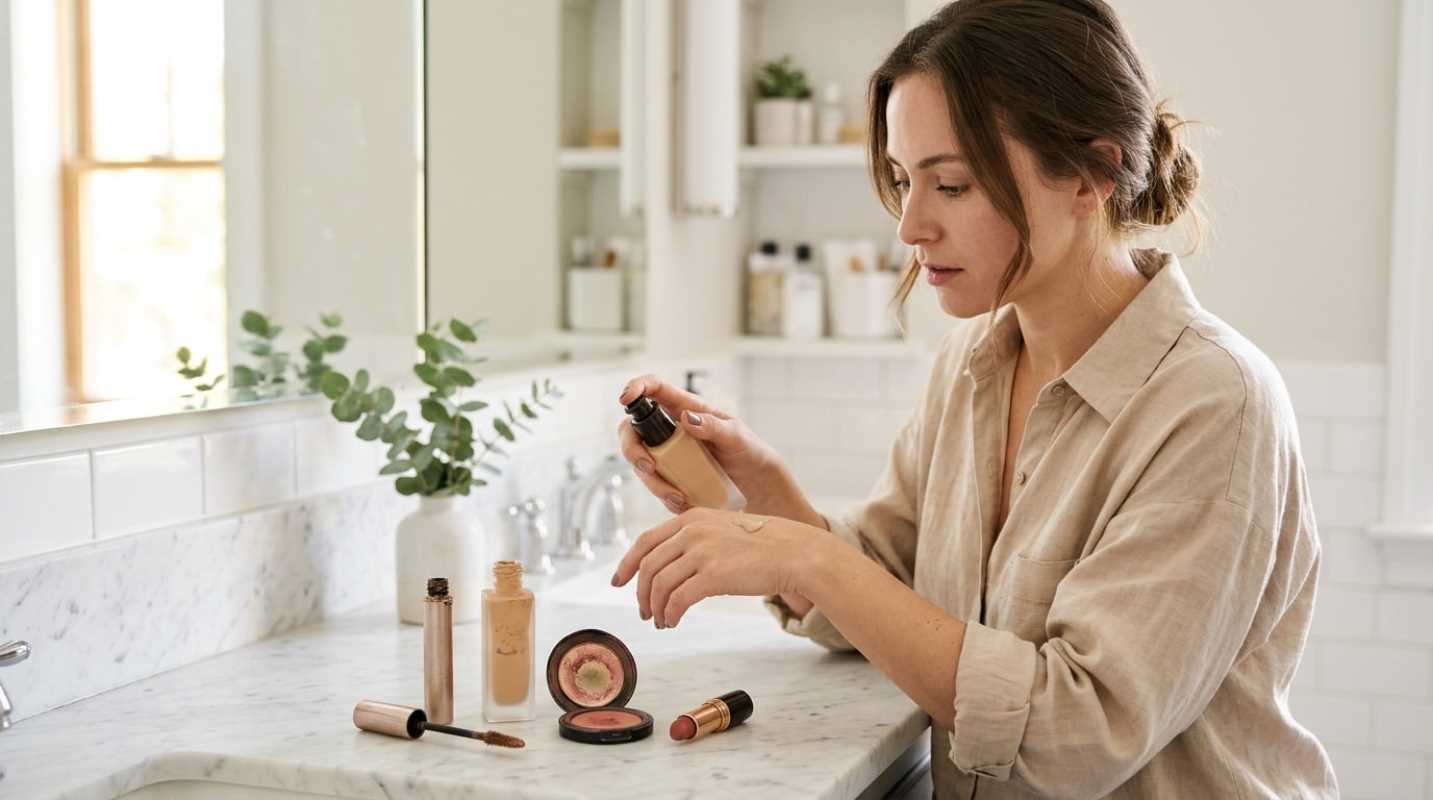
Walk into any cosmetics shop, and you will see shoppers swatching foundation shades on the back of their hands.
Stop doing this immediately.
Your hands get vastly more sun exposure than your face. They also have thinner fat layers, a different texture, and an entirely different melanin distribution. Testing on your hand practically guarantees you will walk out with the wrong bottle.
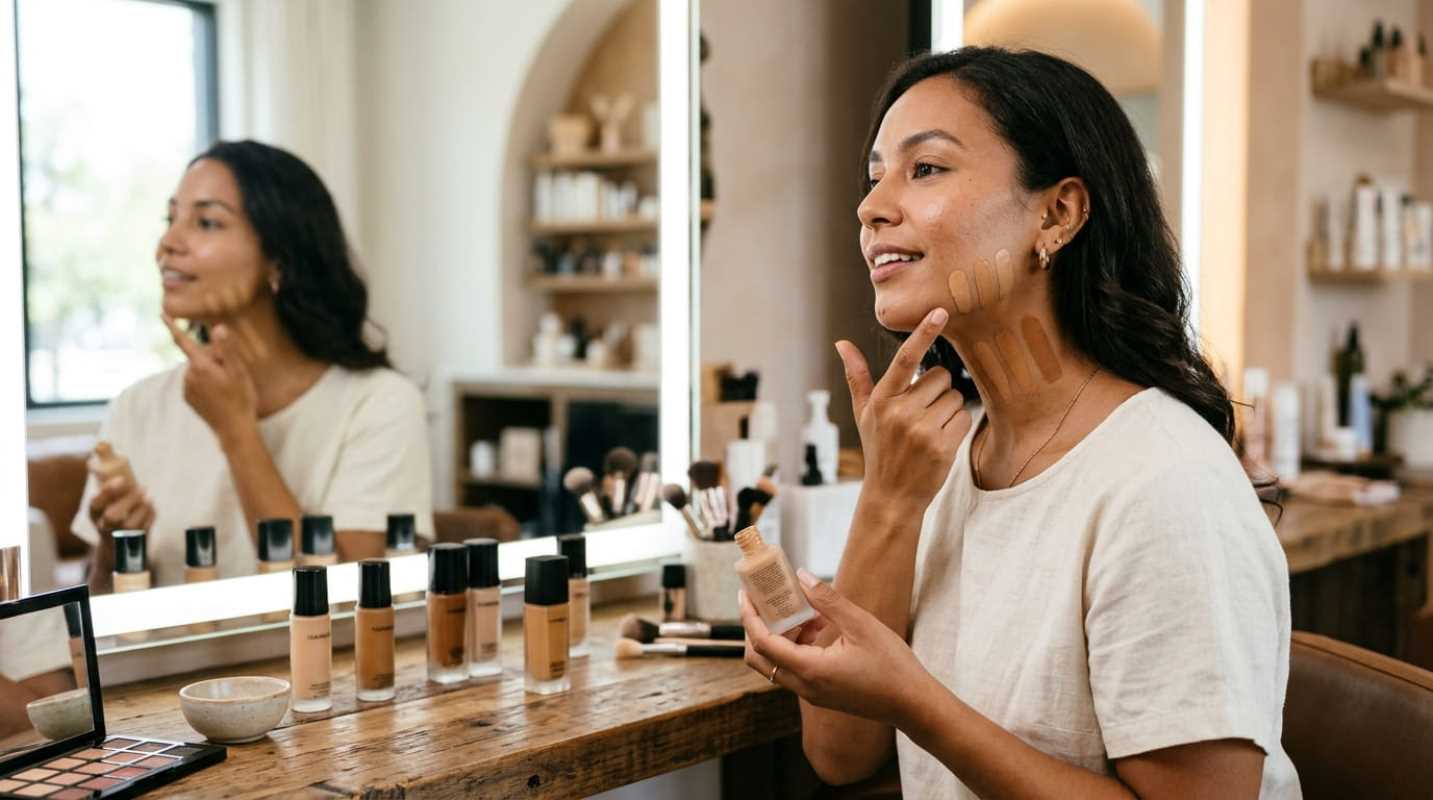
The real sweet spot for testing is your lower jawline.
Grab three candidate bottles: your best educated guess, one that looks half a step lighter, and one that sits half a step deeper. Draw three vertical stripes starting on your lower cheek, crossing your jawline, and ending on your neck.
Take a close look at the bridge between your face and neck. The winning shade is the one that completely disappears into both areas. You do not want a sharp line of demarcation that leaves you looking like you are wearing a mask.
If your face is noticeably lighter or redder than your chest due to daily sunscreen and skin exfoliants, adjust your approach. Match your swatch directly to your collarbone. Blending that match upward creates harmony across your entire torso.
The Importance of Testing in Natural Light
Department store lighting is notorious for misleading shoppers. Between harsh fluorescent overheads and warm vanity bulbs, retail lighting distorts pigments completely.
Before you tap your credit card at the register, grab a small hand mirror and walk toward the exit or an exterior window. Indirect natural daylight tells the real story about whether a formula leans too yellow, too ashen, or just right.
You also need to give the formula time to settle.
Foundation contains liquid oils, silicones, and water that evaporate as the makeup sets. When iron oxides and titanium dioxide interact with air and your natural skin oils, they go through a process called oxidation.
This reaction can darken a shade by half a step or turn it slightly orange within ten minutes. Always let your jawline swatches dry completely for 10 to 15 minutes before making your final call. What looks like an exact match wet might look completely different once dry.
Pro Tips for When You Are Between Shades
Human skin is not a static canvas. Sun exposure changes your depth by up to four shades between January and July, which means one bottle rarely works year-round.
Instead of hunting for an impossible unicorn bottle, build a flexible routine using these pro methods
• The Two-Bottle Rule: Buy two shades from the same product line, one for your deepest summer tan and one for your peak winter pale. You can mix drops on the back of a palette to adjust your base through spring and fall without buying transitional bottles.
• Blue Color Adjusters: If your foundation matches your skin depth but constantly pulls too orange, you might have an olive undertone. Adding a pin-sized drop of pure blue pigment neutralizes warm yellow tones and shifts the foundation into a clean, muted olive.
• Green Color Drops: If your formula looks too pink or salmon against your neck, mix in a tiny touch of green pigment to pull it back toward neutral.
Taking control of your undertone removes the guesswork from makeup shopping. When your foundation matches your skin naturally, you need less product, spend less time blending, and get that effortless, healthy look every single morning.
Sources:
1. Makeup's Inclusivity Race Is Solving the Wrong Problem
https://beautymatter.com/articles/makeups-inclusivity-race-is-solving-the-wrong-problem
2. 69% of Consumers Can't Find Foundation Shade
https://chromarabeauty.com/69-of-consumers-cant-find-foundation-shade/
3. Foundation Shade Matching by Undertone
https://color-analysis.app/blog/foundation-shade-matching-by-undertone