Walk in the door after a long day, and what hits you? If you spray an aerosol can of mountain mist or plug a scented oil warmer into the wall, you might think you are cleaning the air. In reality, you are just masking one smell with a cocktail of synthetic chemistry.
The Environmental Protection Agency notes that concentrations of volatile organic compounds, or VOCs, are consistently two to five times higher indoors than outdoors.¹ Conventional room sprays and plug-in fresheners are among the prime culprits. When researcher Dr. Anne Steinemann led a landmark study analyzing fragranced consumer goods, the results revealed an average of 17 VOCs per product, with nearly half generating at least one hazardous air pollutant.² Common synthetic fragrance additives like limonene also react with ambient indoor ozone to form airborne formaldehyde. That is why so many people get headaches, itchy eyes, or scratchy throats around heavy commercial fragrances.
In 2026, home air care is moving in a much smarter direction. People want clean, breathable spaces without chemical camouflage. Creating an inviting scent profile in your living space starts with neutralizing bad odors before you add a single drop of natural fragrance.
Identifying and Eliminating Odor Sources
Masking an odor never works for long. Think of it like throwing a tarp over a pile of spoiled groceries. You might hide the mess for an hour, but the stink always wins in the end. A fresh home requires molecular neutralization, attacking odors where they live.
Unpleasant household smells typically sit at opposite ends of the pH scale. Sour milk, rancid cooking grease, and pet accidents are acidic. Fish odors and stale urine are alkaline. When you match them with the right natural neutralizer, you cancel them out chemically.
Here are the most effective ways to knock out stubborn odors at the source
• Baking soda for soft fabrics: Sodium bicarbonate is weakly alkaline, with a pH of about 8.3. Sprinkle dry baking soda generously over rugs, carpets, couch cushions, or pet beds. Let it sit for twenty minutes to bind with acidic odor compounds, then vacuum it up.
• Distilled white vinegar for airborne smells: White vinegar sits around 2.5 on the pH scale. If you cooked fish, charred bacon, or forgot to take out the trash, set out a shallow bowl of vinegar on the kitchen counter overnight. It neutralizes airborne alkaline amines while you sleep.
• Activated bamboo charcoal bags: Activated charcoal features millions of microscopic pores that trap volatile gases and moisture through physical adsorption. Stash these linen bags in shoe racks, mudrooms, gym bags, and closets. Place them outside in direct sunlight for an hour once a month to clear the pores, and they will work for up to two full years.
• Bio-enzymatic sprays for organic messes: For stubborn pet spots, trash cans, or kitchen drains, grab a plant-based enzymatic spray. These formulas use friendly bacteria and plant enzymes that digest the proteins, fats, and organic waste, causing the stink.³ They continue working on surfaces for up to seven days after application.
The Power of Proper Ventilation and Cleaning Habits
Have you ever noticed how stuffy a closed-up house feels by Sunday evening? Trapped air gathers dust, pet dander, cooking vapors, and moisture. That stale cocktail quickly turns musty if you do not keep the air moving.
Cross-ventilation is your easiest zero-cost upgrade. Open windows on opposite sides of your house for just ten to fifteen minutes every morning. This quick swap flushes out trapped indoor air without cooling down your walls or driving up your energy bill.
A few simple cleaning habits will keep odors from taking root in your furniture and floors
• Run bathroom exhaust fans longer: Leave the exhaust fan running for twenty minutes after every shower. Trapped humidity creates the perfect breeding ground for mold and mildew, which generate that sour, basement-like odor.
• Wipe kitchen grease immediately: Cooking oil aerosolizes when you fry or sauté, coating cabinet fronts, backsplashes, and range hood filters. Wipe down these surfaces with a simple mix of warm water, vinegar, and a drop of Castile soap before the grease goes rancid.
• Tackle the trash can base: Food liquids inevitably leak through trash bags. Wash the inside of your kitchen garbage bin with hot water and soap once a month, then sprinkle a half-cup of dry baking soda into the bottom of the can before inserting a new liner.
• Run a high-efficiency carbon air filter: If you live near traffic or deal with seasonal allergies, use an air purifier that pairs a HEPA filter with an activated carbon pellet bed. The carbon physically scrubs gaseous odors and VOCs, while the HEPA filter pulls pet hair and pollen out of circulation.
Elevating Your Space with Needed Oils and Simmer Pots
Once your living space is clean and neutral, you can layer in natural aromas. Interior designers call this practice scentscaping, which means matching subtle, natural fragrances to the purpose of each room.
Skip the petroleum-based paraffin candles that deposit black soot on your trim, and use these botanical methods instead
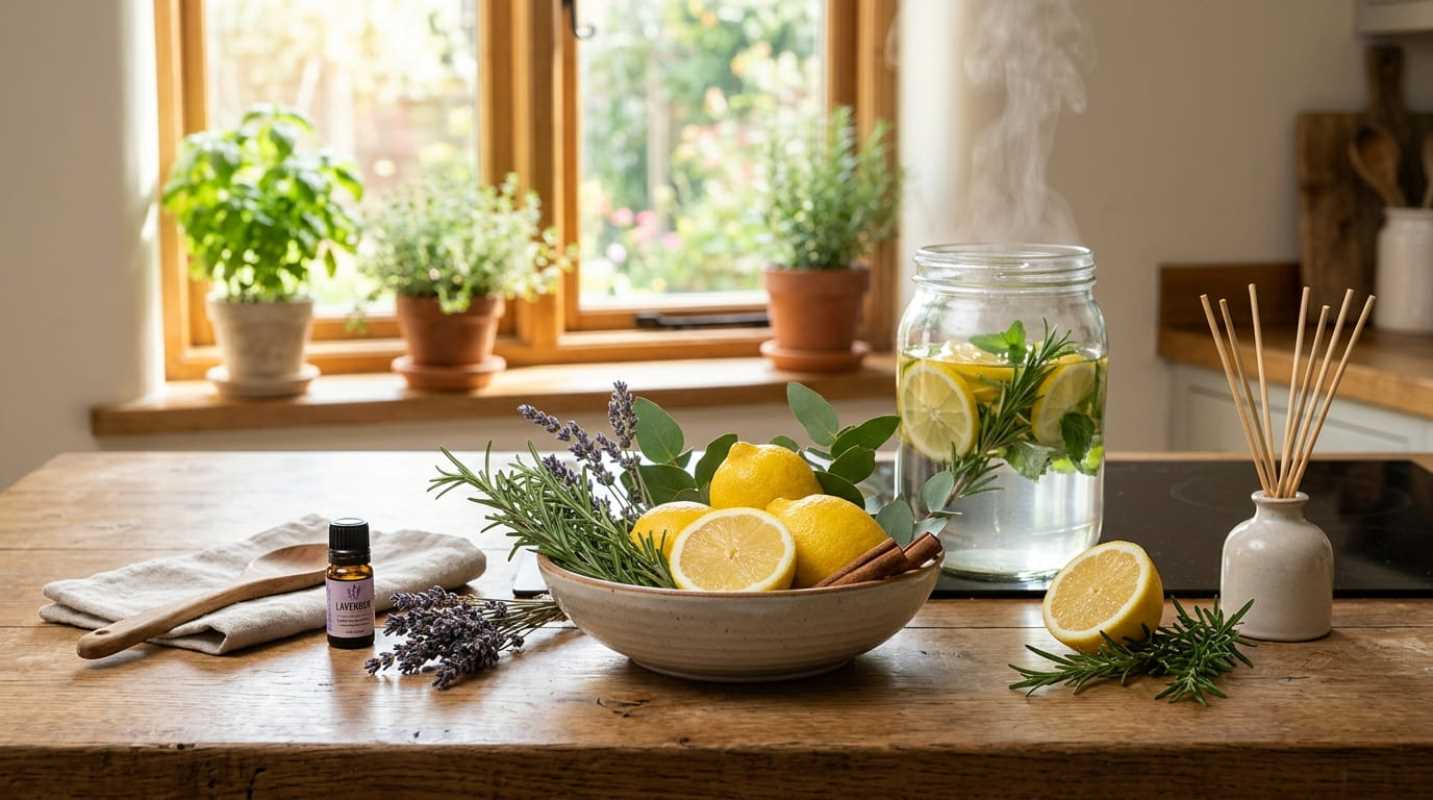
• The classic stovetop simmer pot: This zero-waste kitchen trick works wonderfully when guests are on their way. Fill a small saucepan with water and toss in sliced lemons, fresh rosemary sprigs, and a splash of vanilla extract. For cooler months, try sliced apples, whole cloves, and two cinnamon sticks. Keep the pot on low heat and add water as it evaporates.
• Cold-air nebulizing diffusers: Traditional water diffusers can build up bacteria or add unwanted moisture to humid rooms. Cold-air nebulizers use ambient air pressure to atomize pure oils into ultra-fine microdroplets without heat or water reservoirs.
• Room-specific botanical blends: Use crisp, energizing notes of rosemary, peppermint, and eucalyptus in your home office to stay alert. Save bright citrus notes like bergamot, grapefruit, and sweet orange for the kitchen and living room. For the bedroom, use cedarwood, chamomile, or genuine French lavender to encourage deep relaxation.
• Steam bundles in the shower: Hang a bundle of fresh eucalyptus branches behind your showerhead, just out of the direct water stream. The warm steam releases the plant oils every morning, clearing your sinuses and making your bathroom smell like an upscale spa.
Building a Sustainable Scent Routine
A truly fresh home does not smell like artificial cotton candy or heavy floral perfume. It feels crisp, light, and easy to breathe in.
When you stop masking smells and start neutralizing them, you create a healthier living space for your family and your pets. You do not need an arsenal of aerosol cans to build a welcoming atmosphere. With a few basic pantry staples, clean ventilation, and pure botanicals, you can keep your home smelling bright and fresh every single day.
Sources:
1. Volatile Organic Compounds' Impact on Indoor Air Quality
https://www.epa.gov/indoor-air-quality-iaq/volatile-organic-compounds-impact-indoor-air-quality
2. Fragranced Consumer Products: Chemicals Emitted, Ingredients Unrevealed
https://pmc.ncbi.nlm.nih.gov/articles/PMC3018511/
3. Stop Masking: How Probiotics and Enzymes Actually Eliminate Odor
https://bioscentrix.com/blogs/news/stop-masking-how-probiotics-and-enzymes-actually-eliminate-odor