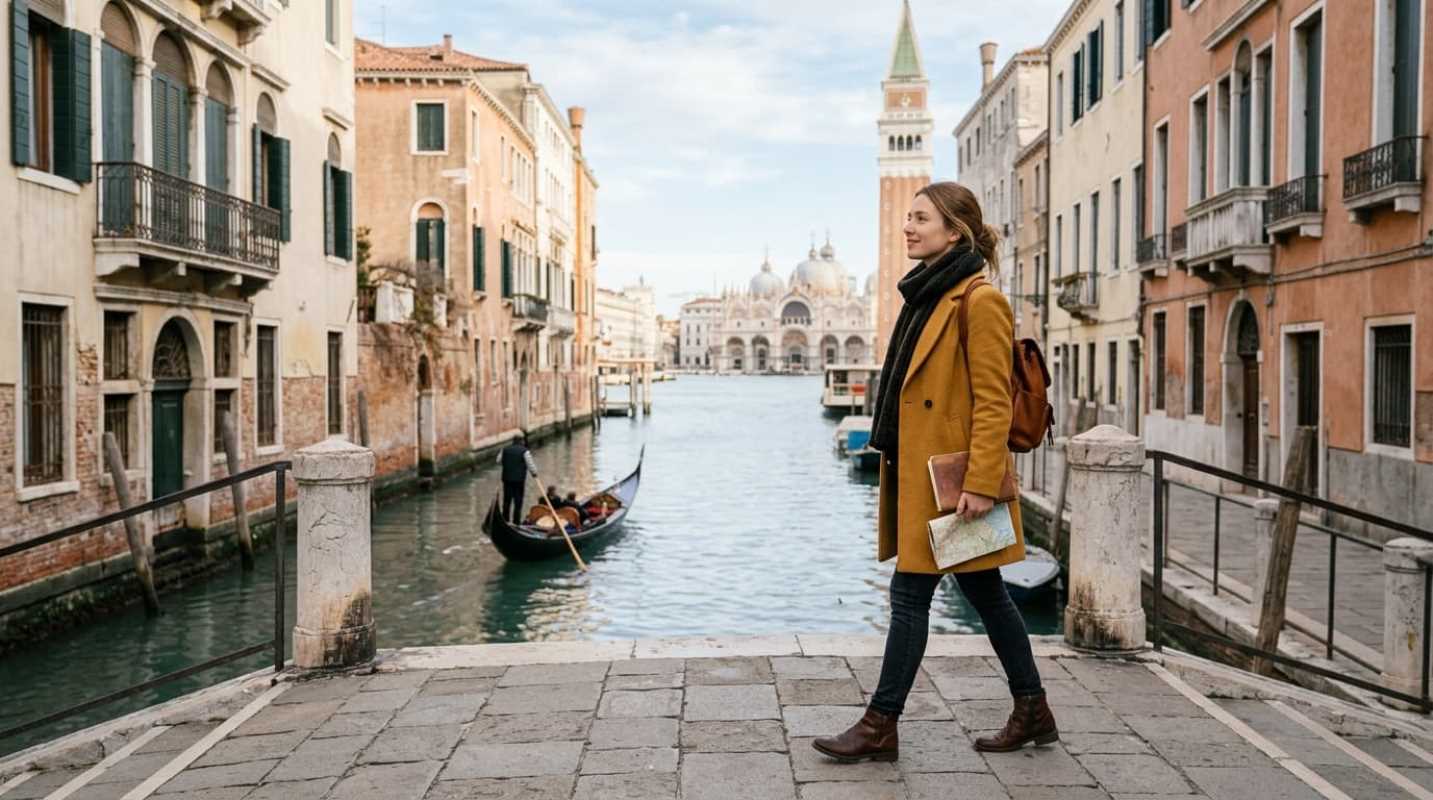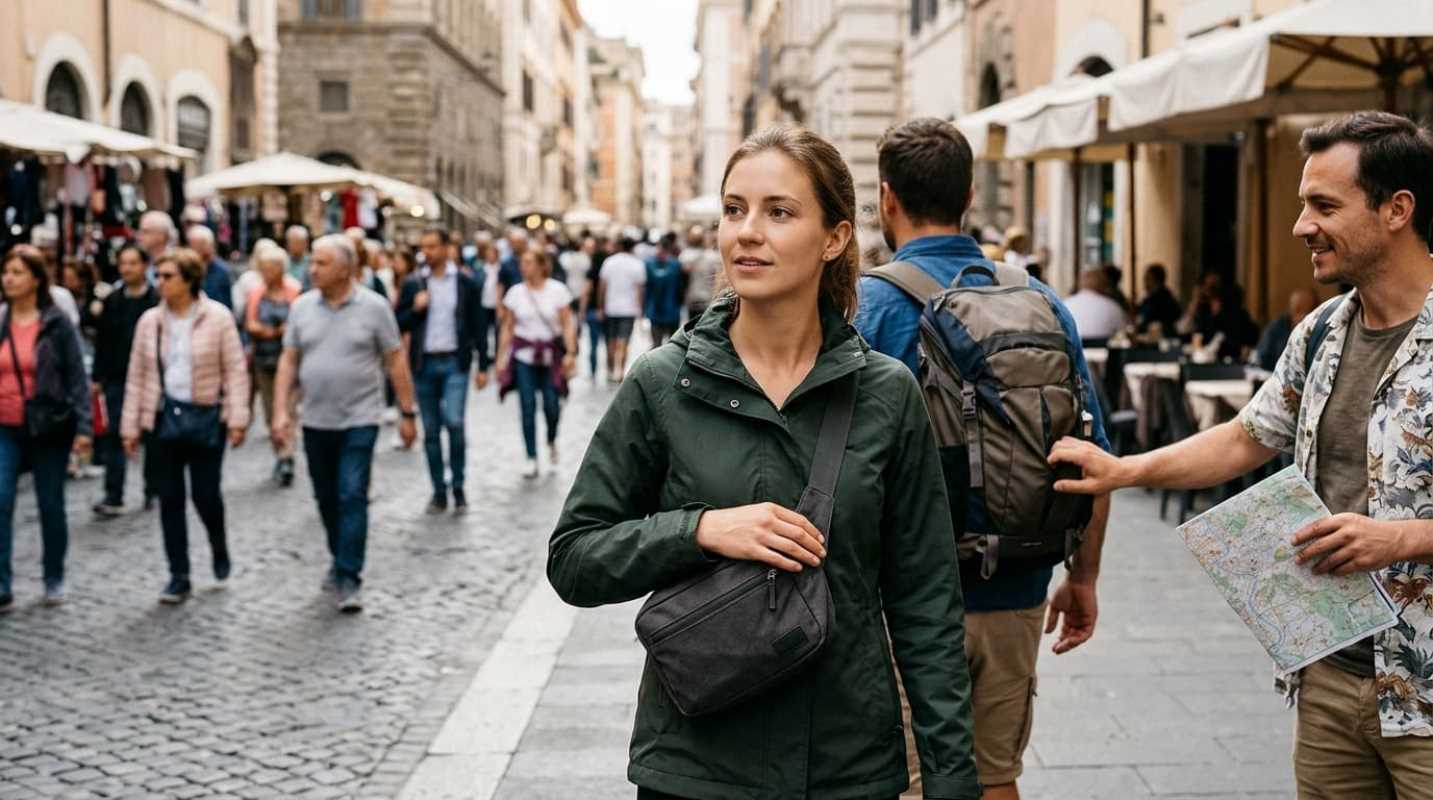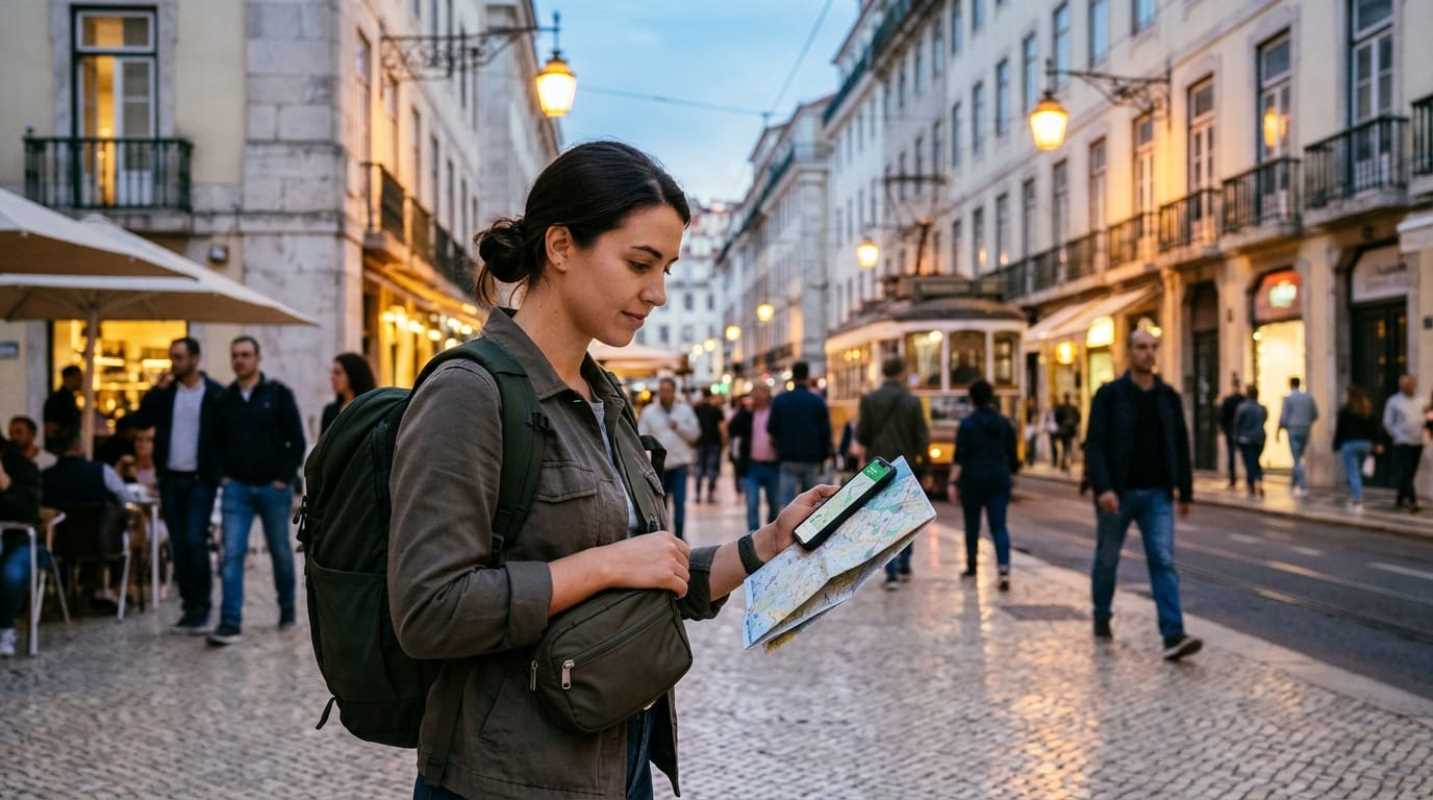
You know the feeling all too well. You are standing around a baggage carousel at midnight, watching an empty conveyor belt turn in circles while your exhaustion peaks. Have you been there? Traveling with only a carry-on changes the entire rhythm of your trip. You walk off the jet bridge, pass the chaotic crowds waiting for their luggage, and head straight out the airport doors into your destination. It saves you serious money, too. U.S. carriers collected a record $7.27 billion in checked baggage fees in recent years, with standard domestic fees sitting between $35 and $40 each way.¹
Packing light is not just a packing technique. It is a completely different way to travel that keeps you mobile, relaxed, and fully in control of your journey.
The Psychology of Traveling Light
Most people do not pack for the trip they are actually taking. They pack for an imaginary version of themselves who attends three formal galas, encounters sudden blizzards in July, and changes outfits four times a day.
This tendency comes down to anxiety. We treat our luggage like an emotional safety net, stuffing extra sweaters and spare shoes into corners just in case something unexpected happens. In reality, carrying twenty pounds of backup outfits creates far more stress than it prevents. Heavy bags drag you down on cobblestone streets, make public transit miserable, and turn every hotel transfer into a workout.
When you step onto a plane with just a carry-on, you eliminate the single biggest failure point of commercial aviation. SITA reported that airlines mishandled roughly 33.4 million bags globally in a single year, with flight transfers causing nearly 39% of those delays.² If your bag never leaves your possession, the airline cannot send it to another continent.
Adopt a simple mental rule before you start folding: you only need what you can comfortably carry yourself. If an emergency truly arises, you can buy what you need when you land.
Curating Your Versatile Capsule Wardrobe
The secret to living out of a single roller bag for seven days is building a modular wardrobe where every individual piece coordinates with everything else. If a shirt matches only one specific pair of pants, leave it on the hanger at home.
A practical framework for a week-long journey is the 5-4-3-2-1 method
• Five tops: Pick two casual tees, one tailored button-down, one fine-knit sweater, and one active long-sleeve layer.
• Four bottoms: Bring one tailored pair of trousers, one pair of dark denim, one pair of shorts or a skirt, and one relaxed travel pant.
• Three pairs of shoes: Wear your walking sneakers on the plane, and pack one dressier pair along with climate-specific sandals or weather boots.
• Two outer layers: Choose one structured piece like an overshirt, plus a packable rain shell.
• One accessory set: Stick to a single versatile belt, sunglasses, and a compact day bag.
This simple formula gives you twenty distinct outfit combinations from fifteen clothing items. That is nearly three weeks of unique daily looks without repeating an exact outfit.
Stick strictly to a three-color palette made of two neutral base tones and one accent shade. Pairing charcoal and cream with an olive accent, or navy and white with rust, makes dressing in the dark effortless. Unify your leather and hardware choices as well. If your shoes feature brown leather and brass accents, make sure your belt and watch match so you never need duplicates.
Fabric choices will make or break your bag. Pick materials that resist stink and stay smooth
• Merino wool: This naturally odor-resistant fabric regulates temperature in heat or cold. You can wear a lightweight merino tee three or four days in a row without a hint of odor.
• Tencel and lyocell blends: These fibers offer high breathability and a smooth drape while shedding creases quickly.
• Technical synthetics: Nylon and elastane blends provide four-way stretch, handle abrasion, and dry within a few hours after a quick sink wash.
Leave heavy 100% cotton denim and bulky fleece jackets at home. They hog space and take a whole day to dry if they get wet.
Mastering the Art of Space Optimization
Fitting a week of gear into forty liters of space requires a deliberate packing approach. Think of your suitcase interior like a game of Tetris where air pockets are your enemy.
Compression packing cubes are the most reliable tool in your arsenal. Unlike standard cubes that merely group items, compression bags feature an exterior perimeter zipper that forces trapped air out, shaving 30% to 40% of the volume off your clothing.
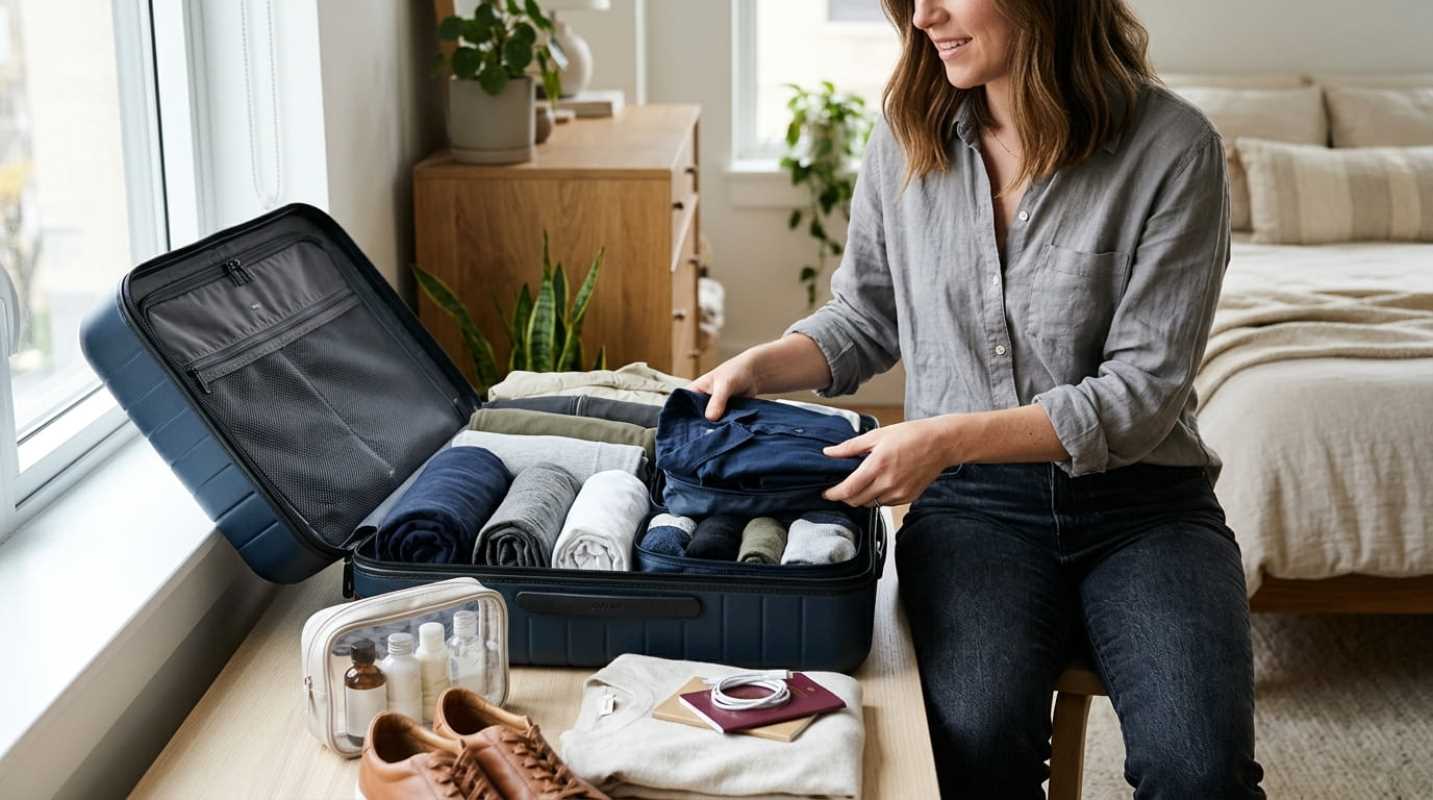
Combine these cubes with the ranger roll method. Tightly rolling your casual tees and undergarments prevents stubborn fold lines and creates compact cylinders that slide cleanly into your cubes. For structured pieces like dress shirts or blazers, lay them flat across the top of your packed cubes right before closing the lid.
Do not ignore dead space inside your footwear. Shoes take up significant room, so stuff them with rolled socks, extra chargers, or small accessories. This keeps your shoes from getting crushed out of shape while freeing up packing corners elsewhere.
Always wear your bulkiest gear during transit. Put on your heaviest walking shoes, your thickest trousers, and your heaviest layer for the flight. This simple habit frees up several pounds of weight and roughly 20% of your interior suitcase capacity.
Trimming the Excess on Toiletries and Tech
Toiletries and electronics quickly consume valuable luggage capacity if you let them.
The easiest way to bypass airport liquid restrictions is to swap out liquids for solids. Solid shampoo and conditioner bars work just as well as bottled formulas. Add a solid stick deodorant, solid mineral sunscreen, and dehydrated toothpaste tablets. By eliminating liquids, you preserve your single clear quart-sized bag exclusively for needed liquids and skincare prescriptions.
Consolidate your technology next. Carrying five separate charging bricks and cords creates tangled clutter. Buy a single high-output Gallium Nitride charger with multiple USB-C ports that can juice your phone, tablet, and laptop simultaneously. Pair it with one universal plug adapter and two durable braided cables.
The Final Checklist Before You Zip
Before you close your bag, lay every item out on your bed for a final edit. Pick up every single piece and ask yourself when you will wear it. If your answer starts with "what if," put it back in your closet.
Verify your carrier's current size limits before walking out your front door. Standard domestic carry-on dimensions generally sit around 22 x 14 x 9 inches without rigid weight caps. International carriers are far stricter, often limiting dimensions to 55 x 40 x 20 centimeters while strictly enforcing weight limits between 7 and 10 kilograms.³
Finally, keep your needs separated from the main compartment. Place your passport, wallet, headphones, and medication in an exterior zip pocket or personal item bag under the seat in front of you. Once you pull that zipper closed, you can handle your journey with complete confidence and total freedom.
Sources:
1. Airlines Raising Checked Bag Fees
https://www.cnbc.com/select/airlines-raising-checked-bag-fees-how-to-avoid-paying-them/
2. More Air Passengers Than Ever With One of the Lowest Rates of Mishandled Baggage
https://www.sita.aero/about-us/pressroom/news-releases/more-air-passengers-than-ever-with-one-of-the-lowest-rates-of-mishandled-baggage-thanks-to-tech-investments/
3. The Complete Guide to Carry-On Size Limits
https://www.kiwi.com/stories/the-complete-guide-to-carry-on-size-limits/