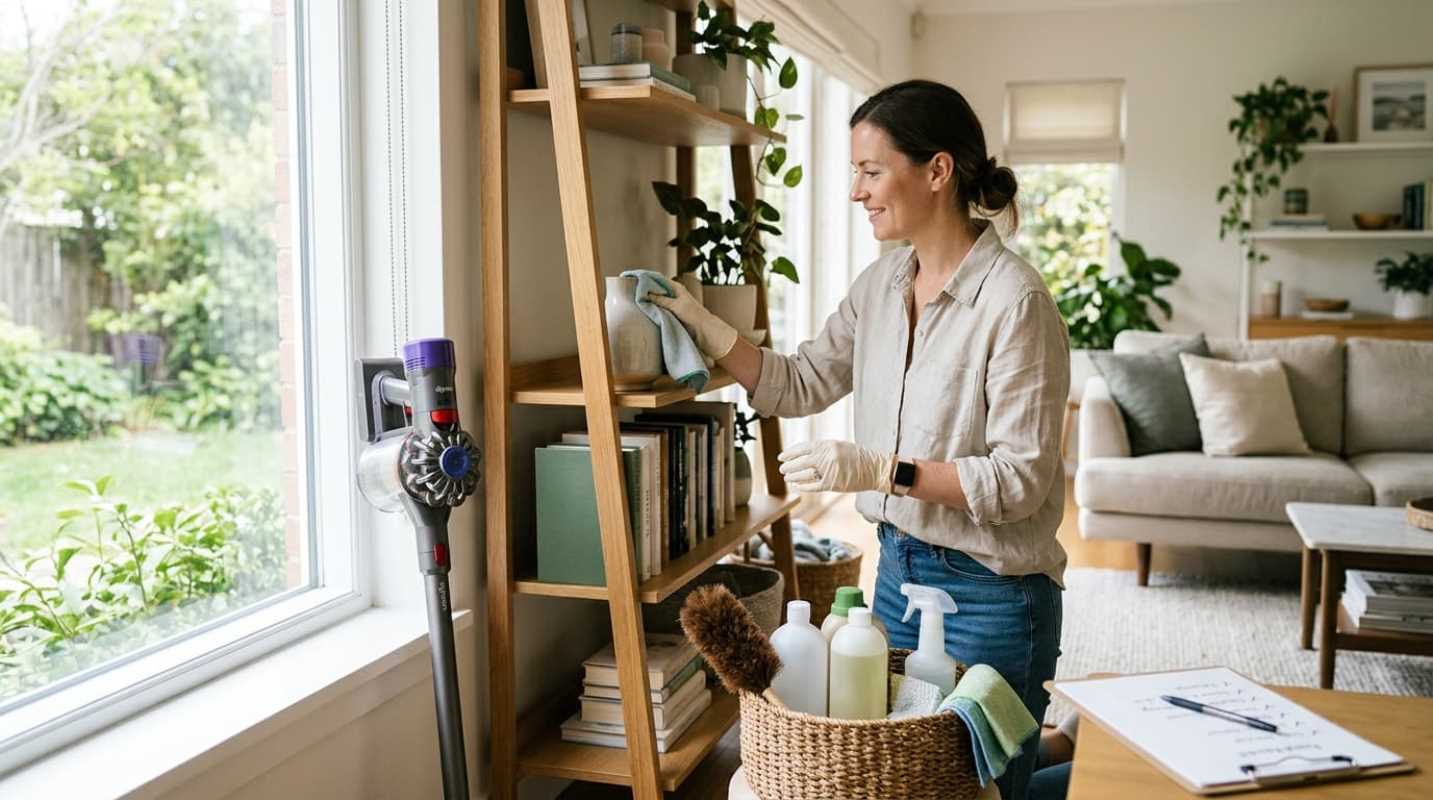
Have you ever looked around your home in early spring and felt a sudden urge to open every window and scrub down every surface? You are not alone. Data from the American Cleaning Institute reveals that 80% of Americans take part in an annual spring cleaning ritual.³
There is something undeniably satisfying about wiping away the dust of a long, closed-up winter. A clean living space clears your head, lowers stress, and sets you up to enjoy the warmer months ahead.
Yet, for many of us, the excitement fizzles out fast. The same research shows that 45% of people spend three or more full days trying to scrub their homes from top to bottom.² Trying to tackle the entire house in one exhausting marathon weekend is a fast track to burnout.
You do not need to spend your entire weekend drowning in chores. With a smart game plan and a room-by-room checklist, you can tackle the grime in manageable chunks and actually enjoy the process.
Stocking Your Green Cleaning Kit
Before you scrub a single tile, check what is in your utility bucket. The Environmental Protection Agency notes that indoor air pollution can be two to five times higher than outdoor air, often because of conventional sprays loaded with synthetic fragrances and harsh chemicals.
You do not need an army of specialty bottles to get a sparkling home. A handful of non-toxic pantry staples can do heavy lifting across every room
• Distilled White Vinegar: An acidic powerhouse that dissolves mineral deposits, hard water stains, and window haze. Keep it away from natural stone like granite or marble, as acid etches those surfaces.
• Baking Soda: A gentle abrasive that neutralizes odors, cuts through light grease, and scrubs without scratching delicate finishes.
• Washing Soda: Far more alkaline than baking soda, this cuts through baked-on oven grease and greasy kitchen exhaust filters.
• Hydrogen Peroxide (3%): A gentle, oxygen-based disinfectant that whitens tile grout and sanitizes cutting boards.
• Liquid Castile Soap: A plant-based cleaner that lifts surface dirt without stripping finishes, making it safe for sealed woodwork and tile floors.
Keep three golden rules in mind when cleaning naturally. First, skip the viral trend of mixing baking soda and vinegar together in a spray bottle. Acid and base instantly cancel each other out into plain salt water, losing their cleaning power. Use the baking soda first as a scrub, wipe it away, and follow up with a vinegar rinse.
Second, give your natural sprays dwell time. Plant-derived cleaners need five to ten minutes of wet contact on a surface to break down grime and kill germs.
Third, never mix Castile soap with acidic liquids like lemon juice or vinegar. The acid breaks the soap down into a curdled, oily mess that leaves a stubborn film on your counters.
Living Areas and Common Spaces
Living rooms accumulate unseen dust on ceiling fans, baseboards, and couch cushions. Start from the top of the room so falling dust lands on surfaces you have not cleaned yet.
• Ceiling Fans and Light Fixtures: Slide an old pillowcase over each fan blade and pull it back slowly. The fabric traps dust inside the pillowcase instead of raining grime down on your coffee table.
• Windows and Sills: Mix equal parts water and white vinegar in a spray bottle with half a teaspoon of cornstarch to stop streaking. Clean your windows on a cloudy day because direct sunlight dries the solution too fast, leaving spots behind.
• Upholstery and Sofas: Pull off the cushions, vacuum deep into the crevices, and sprinkle baking soda across fabric surfaces. Let it sit for thirty minutes to pull out odors before vacuuming it up.
• Baseboards and Corners: Move furniture out a foot or two from the wall to reach the spots that get ignored all year. Wipe baseboards down with a damp microfiber cloth and a drop of Castile soap.
Tackling the Kitchen and Bathroom
The kitchen and bathroom require serious grease-cutting and sanitizing power. These spaces gather the most stubborn buildup in the house, but a targeted approach gets them done quickly.
• The Oven Interior: Mix half a cup of baking soda with three tablespoons of water to create a spreadable paste. Coat the interior walls, let it sit overnight, wipe it clean the next morning, and spritz any lingering residue with vinegar.
• Range Hood Filters: Drop greasy metal mesh filters into a sink of boiling water mixed with half a cup of washing soda and a squirt of liquid dish soap. The grease melts away in fifteen minutes without any heavy scrubbing.
• Refrigerator Coils and Gaskets: Pull your fridge forward and vacuum the back coils to help the compressor run efficiently. Wipe down the rubber door seals with warm, soapy water and dab on a tiny drop of coconut oil to keep the rubber pliable.
• Showerhead Descaling: Fill a plastic bag with distilled white vinegar, tie it securely around the showerhead with a rubber band, and let it soak for a few hours. The mineral deposits dissolve, restoring your water pressure.
• Tile and Grout: Make a gritty paste with hydrogen peroxide and baking soda. Brush it into grout lines with a stiff bristle brush, wait fifteen minutes, and rinse with warm water for instant brightening.
Bedrooms and Closets
Your bedroom should feel like a restful retreat at the end of the day. A seasonal refresh here clears out allergens and resets your wardrobe for the sunnier days ahead.
• Mattress Detox: Strip the bed completely and wash your duvet and sheets in hot water. Sift a cup of baking soda lightly scented with a few drops of lavender oil over the bare mattress, wait an hour, and vacuum thoroughly with a clean upholstery attachment.
• Pillows and Heavy Linens: Wash machine-safe pillows two at a time to keep your washing machine balanced. Add half a cup of baking soda to the wash cycle and half a cup of vinegar to the rinse cycle to revive fluffiness without synthetic fabric softeners.
• The Wardrobe Purge: Sort clothing into clear piles for keeping, donating, or repairing. If you did not wear a winter sweater once over the past four months, pack it away for donation instead of letting it clutter your closet.
• Under-Bed Dusting: Pull out any under-bed storage boxes, vacuum the hidden dust bunnies, and wipe down the floor beneath the frame.
Maintaining Your Momentum
You do not have to conquer this entire checklist in a single weekend. Cleaning marathons often leave people feeling stressed and exhausted, which defeats the purpose of refreshing your home.¹
Instead, try the one-room-a-week method. Focus on the kitchen during week one, the bathrooms during week two, the bedrooms in week three, and finish with the living areas in week four.
Another popular option is the twenty-minute daily micro-sprint. Set a timer after dinner and clean a single zone, like the ceiling fans or the fridge shelves, then stop when the timer dings.
Breaking these tasks down keeps the chores manageable. Put on your favorite music, take it one room at a time, and enjoy the clean, comfortable sanctuary you create for the season.
Sources:
1. Cleaning Secrets Revealed: 40% of Americans Embarrassed to Admit the Last Time They Cleaned
https://www.cleaninginstitute.org/newsroom/2026/cleaning-secrets-revealed-40-americans-embarrassed-admit-last-time-they-cleaned-their
2. Are You Ready to Clean Behind the Couch? Americans List Their Spring Cleaning Targets
https://www.cleaninginstitute.org/newsroom/2025/are-you-ready-clean-behind-couch-americans-list-their-spring-cleaning-targets
3. ACI Survey: 80% of Americans Now Spring Clean Every Year
https://www.cleaninginstitute.org/newsroom/2024/aci-survey-80-americans-now-spring-clean-every-year