 (Image via
Sleep is elusive. We chase it like a dog chasing a squirrel, often with similar levels of success and dignity. We buy the expensive mattresses that promise to align our spines with the cosmos, we drink the herbal teas that taste like wet hay, and we count sheep until we start wondering about the socio-economic status of the shepherd. But often, the problem isn't just about the bed or the bedtime routine; it is about the environment itself. Our bedrooms are frequently accidentally designed to keep us awake, filled with blinking lights, stale air, and textures that feel more like sandpaper than sanctuary.
The concept of multisensory design is essentially about tricking your brain into relaxing by appealing to all five senses simultaneously. It is not enough to just close your eyes and hope for the best. You need to curate an atmosphere where what you see, hear, smell, touch, and even taste (if you count that pre-sleep glass of water) all signal to your nervous system that the day is done. It is about creating a holistic experience that gently bullies your body into a state of rest.
We are going to explore three distinct bedroom design concepts that leverage multisensory inputs to promote deep, restorative sleep. These aren't just aesthetic choices; they are functional upgrades for your circadian rhythm. By engaging sight, sound, touch, and smell in specific ways, you can transform your bedroom from a mere storage locker for your unconscious body into a high-performance sleep machine. Let's dive into the science of snoozing in style.
The Biophilic Rainforest Retreat
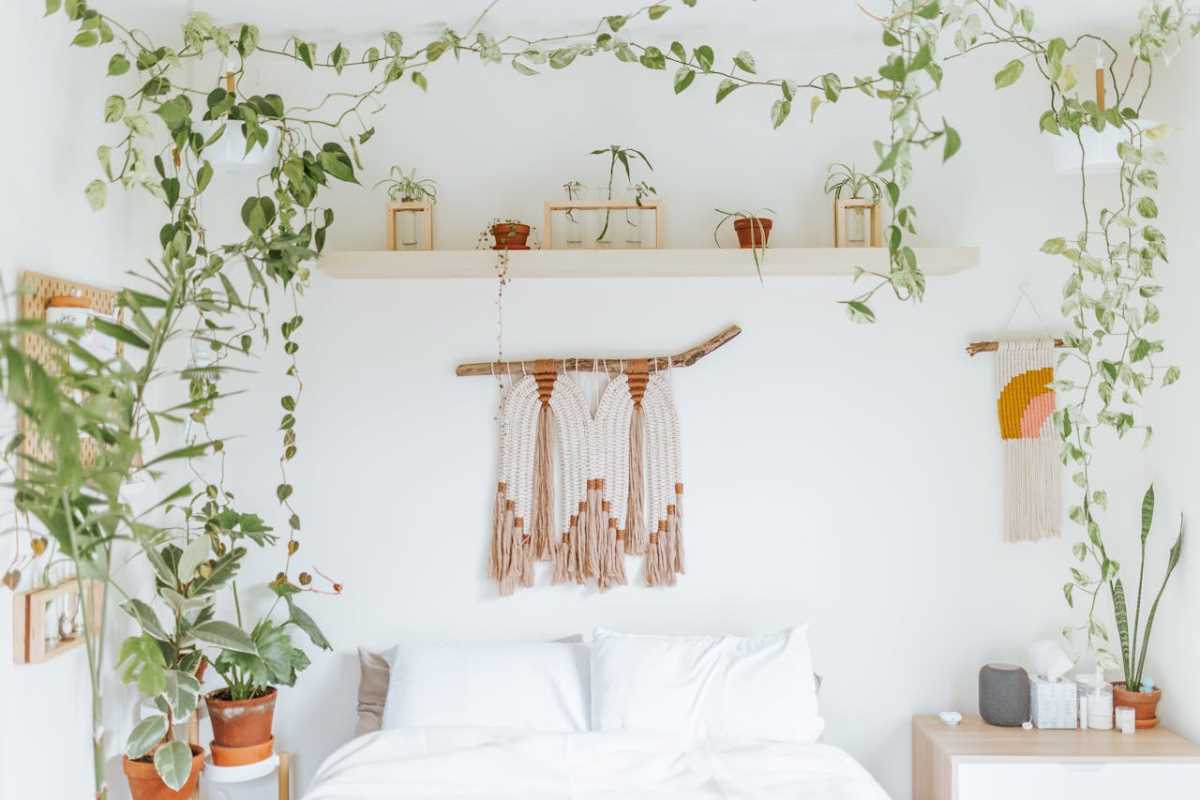
Human beings have spent 99% of our history sleeping outside, or at least in caves that were very close to outside. We are genetically wired to find nature relaxing. The "Biophilic Rainforest Retreat" design leans heavily into this evolutionary quirk. Visually, this means ditching the stark whites and embracing deep, calming greens, earthy browns, and soft, dappled lighting. Imagine painting a feature wall in a rich forest green or using wallpaper with a subtle leaf motif. The goal is to make your eyes believe they are resting on a canopy, not a drywall partition.
Sound plays a crucial role here. You are not just adding a potted plant; you are recreating an ecosystem. A high-quality sound machine or a smart speaker set to a low-volume rainforest soundscape creates a "pink noise" backdrop. Unlike white noise, which is static, pink noise mimics the frequency of nature, wind in the trees, a distant stream, rain on leaves. This auditory layer masks sudden, jarring noises from the street (or your neighbor's late-night karaoke sessions) and gives your brain a consistent, soothing pattern to latch onto as it drifts off.
For the tactile experience, focus on natural, breathable fibers. Cotton, linen, and bamboo are your best friends. They regulate temperature effectively, preventing those night sweats that make you wake up feeling like you have just run a marathon in a sauna. Layering is key here. A chunky knit throw blanket mimics the texture of moss or bark (in a soft way), adding weight and warmth without suffocation. The sensation of natural fibers against skin lowers cortisol levels, reinforcing the safety signal your brain needs to shut down.
Scent is the most direct pathway to the emotional center of the brain. In this rainforest-themed room, you want to avoid the synthetic "Ocean Breeze" sprays that smell like a chemical spill. Instead, use a ceramic diffuser with essential oils like cedarwood, sandalwood, or vetiver. These earthy, grounding scents mimic the olfactory profile of a forest floor. They deepen the breath and slow the heart rate.
The Silent Sanctuary Of Minimalist Stone
If the rainforest feels too busy, perhaps you need the sensory equivalent of an empty inbox. The "Silent Sanctuary" draws inspiration from Japanese Zen gardens and Scandinavian minimalism. It is about the absence of noise, visual, auditory, and mental. The color palette is strictly monochromatic: shades of stone, slate, oatmeal, and chalk. By removing visual clutter and contrasting colors, you reduce the cognitive load on your brain. Your eyes don't have to work to process the room; they can just slide right off the surfaces and close.
Acoustics are paramount in this design. Hard, sleek surfaces look cool but bounce sound around like a pinball machine. To create a true sanctuary, you need absorption. Upholstered headboards, thick wool rugs, and heavy velvet drapes act as acoustic dampers. They swallow the tiny echoes and reverberations that make a room feel "active." The silence in this room should feel heavy and luxurious, like a blanket in itself. It is the kind of quiet that feels expensive.
Texture in a minimalist room must be high-quality because there is nowhere to hide. Since there are fewer objects, the ones you touch must feel incredible. Think polished concrete floors warmed by sheepskin rugs, or sateen sheets that feel like cool water. The contrast between cool, smooth surfaces and warm, fuzzy textiles creates a tactile feedback loop that feels deeply comforting. It satisfies the primal need for shelter and warmth without the visual chaos of a cluttered nest.
Lighting in the Silent Sanctuary is strictly indirect. No exposed bulbs. No ceiling fixtures that stare down at you like an interrogation lamp. Instead, use cove lighting, recessed strips behind the headboard, or low-to-the-ground lamps that wash the floor with light. This keeps the light source out of your direct line of sight, preventing the glare that stimulates wakefulness. It creates a soft, hazy glow that mimics twilight, the universal signal for "time to sleep."
Smell in a minimalist room should be barely there. You don't want a heavy perfume. You want the scent of "clean." This can be achieved with an air purifier, which removes dust and allergens that might disrupt your breathing during the night. A subtle hint of eucalyptus or tea tree oil can enhance the feeling of crispness and clarity. The air should feel scrubbed and fresh, supporting deep, unobstructed breathing, which is the foundation of restorative sleep.
The Womb-like Warmth Of Deep Textiles
Sometimes, you just want to be swaddled. The "Womb-like Warmth" design is the architectural equivalent of a hug. This approach is perfect for those who feel anxious or restless at night. It uses deep, saturated colors like burgundy, navy, charcoal, or burnt orange. While conventional wisdom says light colors make a room feel bigger, dark colors make the walls recede, blurring the boundaries of the room and creating a cozy, infinite cocoon. It feels intimate and protected, shutting out the rest of the world.
Touch is the dominant sense here. This room is a texture bomb. We are talking velvet pillows, faux fur throws, flannel sheets, and a weighted blanket. The weighted blanket is a non-negotiable component of this design. The concept of deep pressure stimulation is well-documented; the weight provides proprioceptive input that calms the nervous system, much like swaddling a baby. It physically anchors you to the bed, reducing tossing and turning.
Auditorily, this room benefits from "brown noise." Brown noise is deeper and more rumbling than white or pink noise, think of a low roar of thunder or a heavy waterfall. It matches the visual weight of the room. It wraps around you, creating a sonic barrier against the outside world. This low-frequency sound is incredibly soothing for people who find high-pitched sounds irritating or distracting.
Lighting should be focused and warm, reminiscent of firelight. Salt lamps or amber-tinted vintage bulbs are perfect here. They emit virtually no blue light, which is the spectrum that suppresses melatonin. The glow should be just enough to navigate the room, creating long shadows and a sense of mystery. It is cave-like in the best possible way, primitive, safe, and warm.
Scent completes the cocoon with warm, spicy notes. Vanilla, amber, or cinnamon work well in this environment. These scents are often associated with comfort food and warmth, triggering a psychological sense of safety and contentment. When you walk into this room, the smell should hit you like a warm memory, instantly signaling your muscles to un-clench and your mind to stop racing. It is a multisensory embrace that refuses to let you stay awake.